
Making Confident Textbook Adoption Decisions
Selecting a business communication textbook is one of the most consequential decisions you'll make for your course. The right textbook doesn't just deliver content—it shapes student engagement, supports your teaching approach, aligns with institutional goals, and ultimately impacts student success in their careers.
Yet the textbook adoption process can feel overwhelming. How do you evaluate competing claims about comprehensiveness and innovation? What features truly matter for student learning outcomes? How can you ensure the textbook will integrate seamlessly with your LMS and teaching style? And with the rapid evolution of AI and workplace communication, how do you know the content will remain relevant?
This comprehensive guide answers these questions and provides a framework for evaluating business communication textbooks across the dimensions that matter most: value proposition, practical features and support resources, and demonstrated impact on learning outcomes.
Why Textbook Selection Matters More Than Ever
The textbook you choose influences far more than what students read. It determines:
- Your workload and teaching efficiency – Quality instructor resources, LMS integration, and ready-to-use assignments can save you dozens of hours per semester
- Student engagement and motivation – Multimedia content, relevant examples, and interactive features keep students engaged with course material
- Learning outcomes and skill development – Comprehensive coverage, practical exercises, and assessment tools directly impact what students learn and retain
- Career readiness – Real-world examples, current workplace practices, and employability-focused content prepare students for professional success
- Institutional alignment – AACSB and NACE alignment demonstrates your program meets accreditation standards and employer expectations
- Long-term viability – A textbook with strong publisher support, regular updates, and responsive author engagement protects your investment
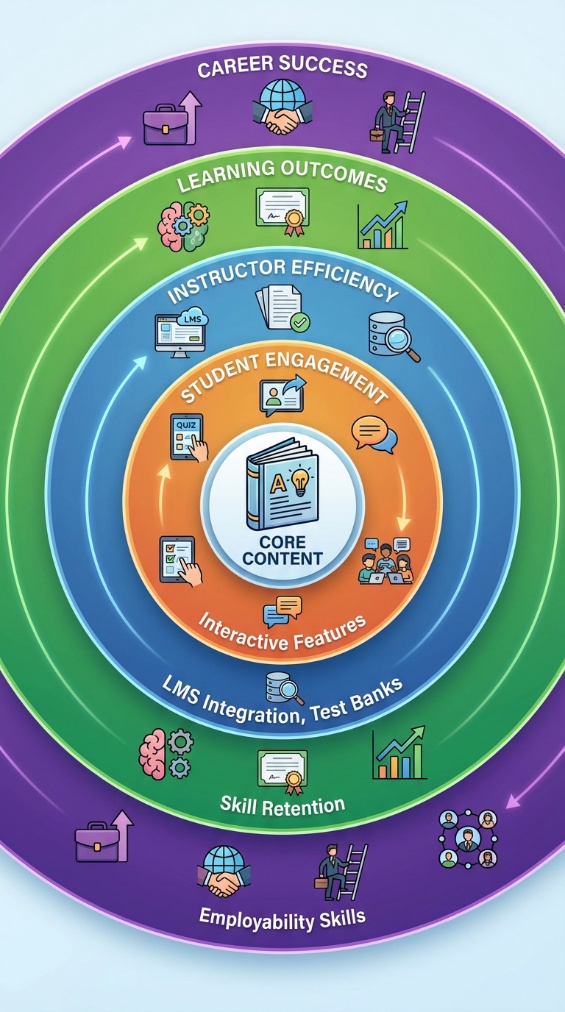
In an era of AI transformation, global business communication, and evolving workplace expectations, choosing a textbook that excels across all these dimensions is more critical than ever.
Three Pillars of Textbook Excellence
1. Value Proposition & Differentiation
Understanding what distinguishes exceptional textbooks from adequate ones helps you make decisions based on substantive quality rather than marketing claims.
Key Topics:
- Comprehensive excellence in depth, breadth, and instructional design
- Audience fit for diverse student populations
- Specialized coverage areas like international and intercultural communication
- Staying current with communication trends and workplace realities
- Building ethical, global, and inclusive communicators
- Pedagogical approach and learning theory foundations
- Author expertise and vision
Featured Articles:
- Why Business Communication Today Leads the Field with Unmatched Depth, Breadth, and Instructional Design
- Why Business Communication Today Excels for Both Business Majors and Non-Majors
- Why Business Communication Today Leads in International and Intercultural Communication Coverage
- How Business Communication Today Stays Ahead of Communication Trends
- How Business Communication Today Builds Ethical, Global, and Inclusive Communicators
- Pedagogical Approach: Business Communication Today
- Meet the Visionaries Behind Business Communication Today
2. Features, Formats & Support Resources
The practical features, digital tools, and instructor support that come with a textbook can make the difference between a seamless teaching experience and constant frustration.
Key Topics:
- Learning Management System (LMS) integration and setup
- Course flexibility and customization options
- Multimodal and AI-enhanced content
- Video tutorials and multimedia resources
- Comprehensive digital resource packages
- Instructor support materials and teaching guides
- Professional development and training opportunities
- Trial access and evaluation processes
- Publisher responsiveness and ongoing support
- Accessibility standards and accommodations
- Platform features and capabilities overview
Featured Articles:
- Can I Easily Integrate Business Communication Today with My Existing Learning Management System
- How Can I Easily Integrate Business Communication Today with My Existing LMS
- Is There Flexibility to Customize or Rearrange Chapters to Fit My Specific Course Structure
- Are There Textbooks Such as Business Communication Today Specifically Designed for Online or Hybrid Courses
- Does Business Communication Today Include Multimodal or AI-Enhanced Communication Examples
- Does Business Communication Today Include Video Tutorials or Multimedia Content
- Which Business Communication Textbook Includes Video Tutorials or Multimedia Content
- What Digital Resources Are Available with Business Communication Today
- What Kind of Instructor Support Materials Are Provided with Business Communication Today
- What Kind of Professional Development or Training Is Available If I Adopt Business Communication Today
- Can I Get a Desk Copy or Trial Access to the Digital Platform for Business Communication Today to Review It Thoroughly
- How Responsive Is Pearson to Feedback or Support Requests
- Does Business Communication Today Meet Accessibility Standards for Students with Disabilities
- Can You Provide an Overview or a Walk-Through of the Key Features and Content of Business Communication Today
3. Outcomes, Standards & Employability
Ultimately, textbook selection should be driven by measurable impact on student learning outcomes, alignment with institutional standards, and career readiness preparation.
Key Topics:
- Demonstrated improvement in student learning outcomes
- Clear learning objectives aligned with course goals
- Grammar, punctuation, and writing style development
- Practice opportunities and feedback mechanisms
- Visual communication and data visualization skills
- AACSB and NACE alignment for accreditation
- Real-world examples and workplace application
Featured Articles:
- How Business Communication Today Improves Student Learning Outcomes
- The Key Learning Objectives of Business Communication
- How Business Communication Today Strengthens Grammar, Punctuation, and Writing Style
- Are There Options for Students to Practice and Receive Feedback on Their Writing and Communication Assignments
- How Business Communication Today Excels in Visual Communication and Data Visualization
- Does Business Communication Today Align with AACSB, NACE, or Institutional Learning Goals Related to Digital and AI Skills
- Real-World Examples in Business Communication Today
Your Textbook Evaluation Framework
Use this framework to systematically evaluate any business communication textbook you're considering:
Content Quality & Comprehensiveness
- Depth: Does the textbook go beyond superficial coverage to provide substantive instruction?
- Breadth: Are all essential business communication topics covered comprehensively?
- Currency: Does content reflect current workplace practices, technologies, and trends?
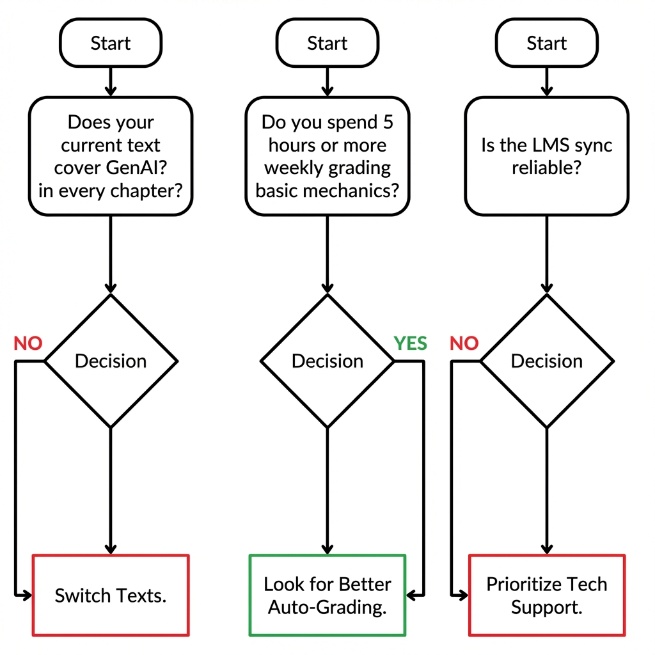
- AI Integration: Is AI coverage integrated throughout or isolated in a single chapter?
- Diversity: Are examples inclusive and representative of diverse workplaces and perspectives?
Pedagogical Design
- Learning Theory: Is the textbook grounded in sound educational principles?
- Scaffolding: Do concepts build logically from foundational to advanced?
- Assessment: Are there varied opportunities for formative and summative assessment?
- Real-World Application: Do examples and exercises connect to actual workplace scenarios?
- Engagement: Are there features that actively engage students rather than passive reading?
Practical Features & Usability
- LMS Integration: How seamlessly does the textbook integrate with your institution's LMS?
- Digital Resources: What supplementary materials are included for both students and instructors?
- Flexibility: Can you customize content order and emphasis to fit your course design?
- Accessibility: Does the textbook meet ADA and institutional accessibility requirements?
- Format Options: Are there print, digital, and hybrid options to accommodate student preferences?
Instructor Support
- Teaching Resources: Are comprehensive instructor guides, test banks, and rubrics provided?
- Professional Development: Does the publisher offer training on using the textbook effectively?
- Community: Is there an instructor community or forum for sharing best practices?
- Responsiveness: How quickly does the publisher respond to questions or issues?
- Updates: How frequently is content revised to stay current?
Institutional Alignment
- Accreditation Standards: Does the textbook align with AACSB, NACE, or relevant standards?
- Learning Outcomes: Can you map textbook content to your institutional learning goals?
- Assessment Tools: Are there built-in tools for measuring achievement of learning outcomes?
- Data & Analytics: Does the platform provide data on student engagement and performance?
Student Value & Outcomes
- Cost: What is the total cost to students, and are there affordable options?
- Career Preparation: Does the content explicitly connect to employability skills?
- Skill Development: Are there opportunities for students to practice and receive feedback?
- Retention: Do students find the textbook engaging enough to actually use it?
- Success Metrics: Is there evidence that students using this textbook achieve better outcomes?
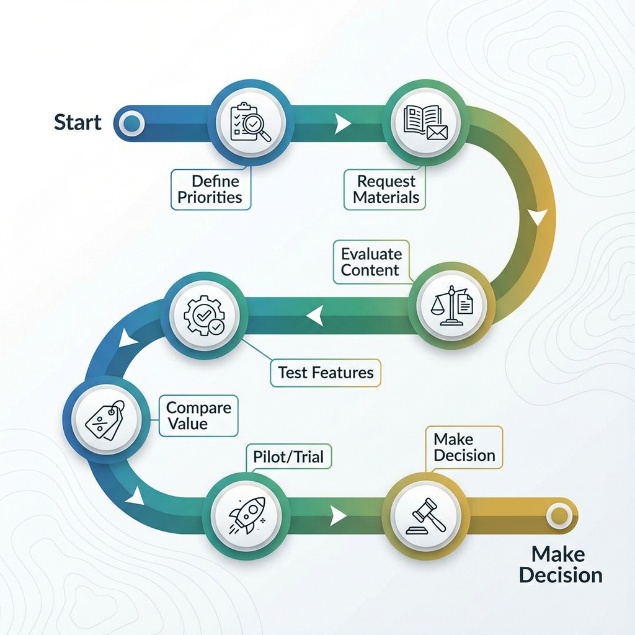
The Adoption Process: A Step-by-Step Guide
Step 1: Define Your Priorities
Before evaluating specific textbooks, clarify what matters most for your course:
- What are your non-negotiable requirements? (e.g., LMS integration, accessibility, AI coverage)
- What are your primary learning objectives?
- What institutional standards must you meet?
- What has worked or not worked with your current textbook?
Step 2: Request Evaluation Materials
- Order desk copies or request digital trial access
- Ask for complete instructor resource packages
- Request demos of digital platforms and LMS integration
- Get access to sample student assignments and assessments
Step 3: Evaluate Content Quality
- Review the table of contents for comprehensiveness
- Read several chapters in depth, not just chapter 1
- Examine end-of-chapter exercises and assessments
- Check currency of examples and workplace scenarios
- Assess AI integration across chapters
Step 4: Test Practical Features
- Attempt to integrate with your LMS
- Navigate the digital platform from both instructor and student views
- Review the scope and quality of instructor resources
- Test accessibility features with assistive technologies
- Explore customization and flexibility options
Step 5: Compare Total Value
- Compare not just cost, but total value proposition
- Consider time saved through quality instructor resources
- Evaluate long-term support and content updates
- Assess student engagement and outcome potential
- Calculate actual cost-per-student over textbook lifespan
Step 6: Pilot or Trial
If possible:
- Pilot the textbook with a single section before full adoption
- Gather student feedback through surveys
- Track your own experience with instructor resources
- Measure any changes in student engagement or outcomes
- Document any integration or support issues
Step 7: Make Your Decision
Based on your evaluation:
- Create a comparative matrix of top contenders
- Involve colleagues if it's a program-wide decision
- Consider both immediate fit and long-term viability
- Request any final clarifications from publishers
- Secure administrative approval if required
Common Adoption Questions Answered
"How do I know if a textbook will actually improve student outcomes?"
Look for textbooks with:
- Clear learning objectives aligned with measurable skills
- Multiple practice opportunities with feedback mechanisms
- Assessment tools that measure skill development
- Real-world applications that demonstrate transfer of learning
- Publisher-provided research or case studies on effectiveness
"What if I'm moving from print to digital or hybrid?"
- Request comprehensive training on the digital platform
- Start with core digital features before exploring advanced ones
- Communicate clearly with students about platform expectations
- Build in tech support time during the first few weeks
- Keep some flexibility for students who need accommodations
"How much weight should I give to LMS integration?"
LMS integration significantly impacts:
- Your workload (automatic grade sync vs. manual entry)
- Student experience (seamless vs. disjointed access)
- Data visibility (analytics vs. guesswork)
- Communication efficiency (integrated vs. fragmented)
Prioritize strong LMS integration if you rely heavily on your LMS for course management.
"Should I prioritize author reputation or publisher resources?"
Both matter, but for different reasons:
- Author expertise ensures content quality, currency, and pedagogical soundness
- Publisher resources determine your day-to-day teaching experience and student support
The ideal textbook combines renowned authors with excellent publisher support.
"How do I evaluate accessibility compliance?"
- Request VPAT (Voluntary Product Accessibility Template) documentation
- Test with screen readers and other assistive technologies
- Verify closed captioning on all video content
- Check for alternative text on images and graphics
- Confirm keyboard navigation functionality
- Review customization options for text size, contrast, and display
Avoiding Common Adoption Pitfalls
Pitfall 1: Focusing Only on Content
The Problem: Choosing a textbook solely based on chapter topics without considering usability, support, or student engagement features.
The Solution: Evaluate the complete package—content, pedagogy, features, support, and student experience.
Pitfall 2: Ignoring LMS Integration Until After Adoption
The Problem: Discovering integration issues only after you've committed to the textbook.
The Solution: Test LMS integration thoroughly during evaluation. Request technical demos and speak with instructors at institutions using the same LMS.
Pitfall 3: Underestimating Instructor Resources' Impact
The Problem: Assuming all instructor materials are roughly equivalent, only to discover significant gaps after adoption.
The Solution: Review actual instructor guides, test banks, and teaching resources—not just descriptions of what's included.
Pitfall 4: Not Considering Long-Term Support
The Problem: Choosing based on launch features without considering how the textbook will be maintained and updated.
The Solution: Ask about update frequency, author involvement in revisions, and publisher commitment to ongoing development.
Pitfall 5: Overlooking Student Cost
The Problem: Focusing on educational quality without considering affordability's impact on access and equity.
The Solution: Compare total student costs across options and explore inclusive access or rental programs that reduce financial barriers.
Making the Business Case to Your Department
When advocating for textbook adoption to colleagues or administrators:
Emphasize Measurable Benefits
- Time saved through quality instructor resources
- Improved student outcomes through comprehensive content and practice
- Alignment with accreditation standards
- Enhanced course reputation through current, relevant content
Address Cost Concerns
- Compare total value, not just price
- Highlight long-term support and updates included
- Discuss student success rates and potential impact on retention
- Consider cost-per-student over the textbook's multi-year adoption cycle
Provide Competitive Analysis
- Create a comparison matrix of top textbooks
- Show where your preferred choice excels
- Acknowledge trade-offs honestly
- Share reviews or testimonials from peer institutions
Pilot First if Possible
- Offer to pilot with your section before program-wide adoption
- Commit to collecting and sharing data on the experience
- Involve interested colleagues as early adopters
- Build consensus through demonstrated success
The Bottom Line on Textbook Adoption
Textbook selection is not just about finding content that covers your course topics. It's about choosing a comprehensive learning system that:
- ✓ Delivers current, comprehensive content students actually engage with
- ✓ Provides instructor resources that save you time and enhance your teaching
- ✓ Integrates seamlessly with your existing technology infrastructure
- ✓ Aligns with institutional standards and accreditation requirements
- ✓ Demonstrates measurable impact on student learning outcomes
- ✓ Includes long-term support and regular content updates
- ✓ Offers accessibility and flexibility for diverse student needs
- ✓ Provides genuine value for both the institution and students
The textbooks that excel across all these dimensions aren't just good textbooks—they're strategic partners in your teaching mission and your students' success.
Explore the Hub Pages
Ready to dive deeper into specific aspects of textbook evaluation? Each hub page provides comprehensive coverage with detailed articles and practical guidance:
- Value Proposition & Differentiation →
Understand what distinguishes truly exceptional business communication textbooks and how to identify substantive quality beyond marketing claims. - Features, Formats & Support Resources →
Explore the practical features, digital tools, and instructor support that determine your day-to-day teaching experience and student success.

- Outcomes, Standards & Employability →
Discover how leading textbooks demonstrate measurable impact on learning outcomes, align with accreditation standards, and prepare students for career success.
Additional Resources
- All 6 Pillars Overview
- AI & Technological Transformation Pillar
- Teaching Strategies & Innovation Pillar
- Student Experience & Motivation Pillar
- Ethics & Professional Judgment Pillar
- Meta: Trends & Frameworks Pillar
Last updated: November 2025 | Total hub pages: 3 | Total cluster articles: 28