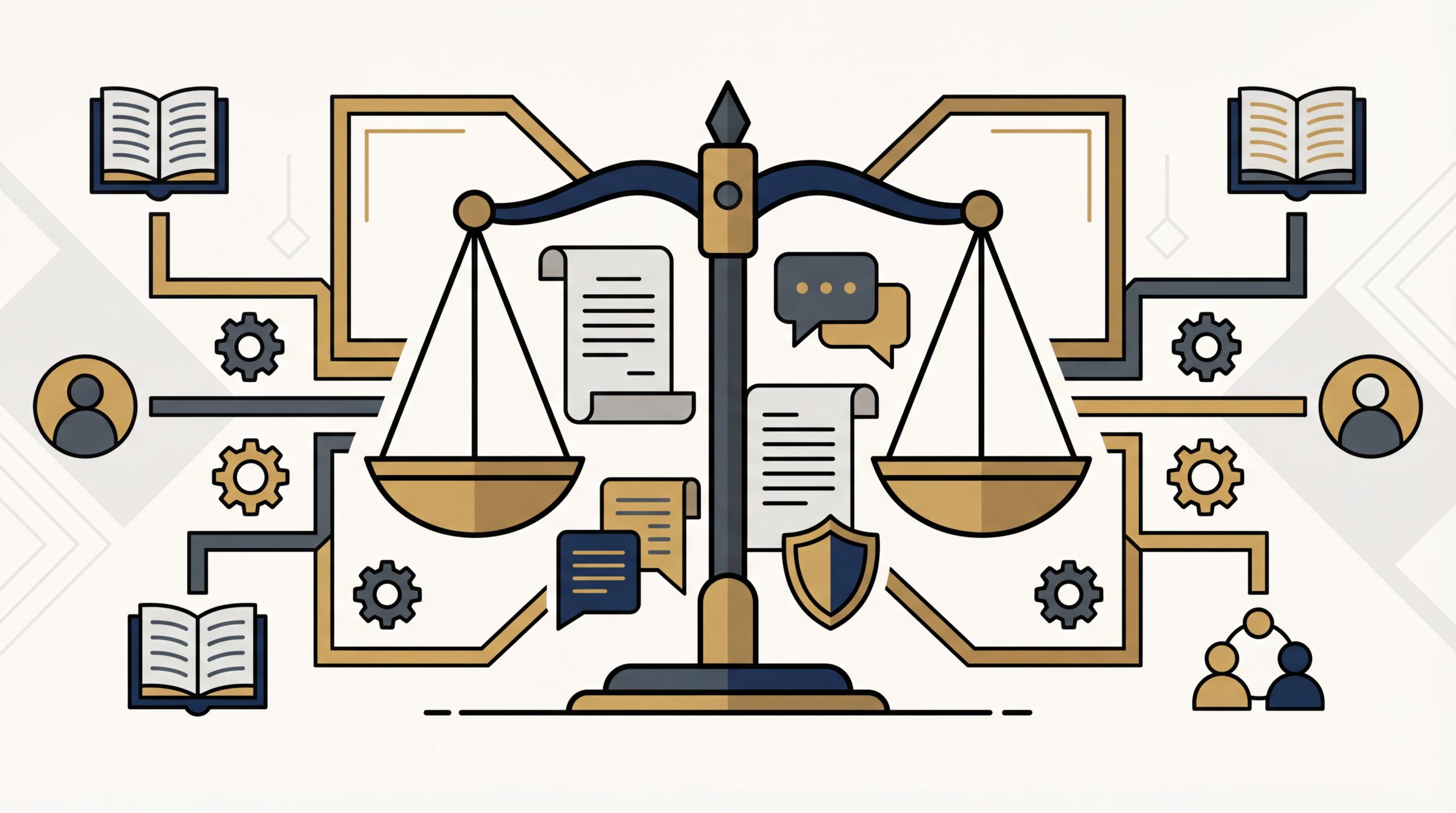
Ethics & Professional Judgment in Business Communication
Teaching Ethics in an Era of AI, Information Overload, and Ethical Ambiguity

Business communication has always carried ethical weight. The words we write, the messages we craft, and the strategies we teach have real consequences—influencing decisions, shaping perceptions, and impacting lives. But today's ethical landscape is more complex than ever.
AI makes plagiarism detection harder while simultaneously raising new questions about authorship and originality. Social media blurs the lines between influence and manipulation. Information abundance creates opportunities for selective truth-telling. Workplace pressure to produce results can conflict with ethical communication principles. And students arrive with widely varying ethical frameworks shaped by different cultural, religious, and personal backgrounds.
As business communication instructors, we're not just teaching students to write emails and deliver presentations—we're shaping future professionals who will face ethical dilemmas daily. The ethical foundations we build (or fail to build) in our classrooms will influence how they navigate pressure to deceive customers, massage data, or prioritize image over substance.
This pillar page explores the ethical dimensions of business communication instruction: how to navigate academic integrity in the AI era, avoid hidden ethical landmines in your curriculum, teach the crucial distinction between persuasion and manipulation, and cultivate the professional judgment that defines instructor excellence.
Why Ethics Cannot Be an Afterthought
Some instructors treat ethics as a single lecture, a chapter to cover, or a box to check. This approach fails for several reasons:
Ethics Is Embedded in Every Communication Decision
- Word choice carries ethical implications—framing, euphemisms, loaded language
- Visual design can clarify or obscure, inform or manipulate
- Information selection involves choices about what to include, emphasize, or omit
- Audience analysis requires respecting rather than exploiting audience vulnerabilities
- Persuasive strategy must distinguish influence from manipulation
Students Face Ethical Dilemmas Immediately
- Using AI in assignments requires judgment about appropriate vs. inappropriate use
- Collaborating on individual assignments tests boundaries of acceptable cooperation
- Representing sources involves integrity in citation and paraphrasing
- Balancing competing pressures in real client projects or internships
- Navigating workplace expectations that may conflict with ethical principles
Ethical Failures Have Real Consequences
- Academic dishonesty undermines learning and devalues degrees
- Professional deception destroys careers, damages organizations, and harms stakeholders
- Manipulative communication erodes trust in institutions and professions
- Cultural insensitivity creates hostile environments and perpetuates harm
- Information manipulation contributes to societal polarization and dysfunction
Ethical Competence Is a Learned Skill
- Students don't automatically recognize ethical dimensions of communication
- Good intentions aren't sufficient when facing complex ethical dilemmas
- Ethical frameworks provide tools for navigating ambiguous situations
- Practice and reflection develop ethical judgment over time
- Instructor modeling shapes student understanding of professional ethics
Ethics must be woven throughout your course, addressed explicitly in context, and practiced repeatedly—not just discussed once and assumed.
Two Dimensions of Ethical Teaching
1. Ethics & Academic Integrity
Creating ethically grounded courses requires vigilance about hidden ethical landmines, proactive approaches to academic integrity, and clear teaching about persuasion ethics.
Key Topics:
- Identifying and addressing 26 potential ethical landmines in business communication curriculum
- Developing comprehensive strategies to prevent and address cheating, plagiarism, and other academic integrity violations
- Teaching students to distinguish ethical persuasion from manipulation
Featured Articles:
- Which of These 26 Ethical Landmines Is Hiding in Your Curriculum
- What Strategies Effectively Combat Cheating, Plagiarism, and Abuse in Business Communication Classrooms
- When Does Persuasion Become Manipulation in Business Communication
2. Professional Identity & Instructor Excellence
Ethical teaching requires more than knowledge—it demands professional judgment, integrity, and commitment to excellence that students can observe and emulate.
Key Topics:
- Five essential traits of excellent business communication instructors based on three decades of observation
- How instructor character and professional judgment shape student development
- Balancing multiple responsibilities while maintaining ethical standards
Featured Articles:
- What Makes a Business Communication Instructor Truly Excellent: Five Essential Traits from Three Decades of Observation
Hidden Ethical Landmines in Business Communication Curriculum
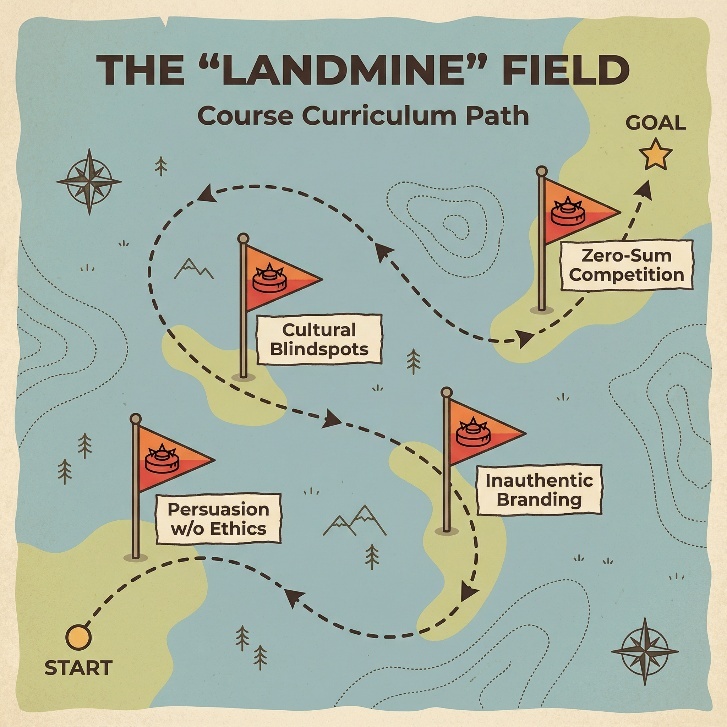
Even well-intentioned courses can inadvertently teach ethically problematic approaches. Watch for these common landmines:
Landmine Category: Persuasion Without Ethics
The Problem: Teaching persuasive techniques without explicit ethical frameworks
Examples:
- Emotional appeals without discussing manipulation
- Audience analysis that treats people as targets to exploit
- Persuasive strategies without considering truthfulness
- Sales writing that prioritizes conversion over honesty
The Fix:
- Always pair persuasion instruction with ethical boundaries
- Teach students to ask "Is this influence or manipulation?"
- Require ethical justification for persuasive choices
- Use case studies where persuasion crossed ethical lines
- Discuss long-term consequences of manipulative communication
Landmine Category: Cultural Insensitivity
The Problem: Teaching communication approaches as universal when they're actually culturally specific
Examples:
- Asserting direct communication is always better
- Presenting U.S. business norms as global standards
- Using examples that stereotype or marginalize
- Ignoring power dynamics in cross-cultural communication
- Treating "international communication" as an afterthought
The Fix:
- Acknowledge cultural variation in communication preferences
- Present approaches as context-dependent, not universal
- Use diverse, authentic examples from multiple cultures
- Discuss how power and privilege affect communication
- Integrate intercultural competence throughout course
Landmine Category: AI and Authenticity
The Problem: Unclear expectations about AI use that create ethical gray areas
Examples:
- Prohibiting all AI use without explaining why
- Allowing unrestricted AI use without discussing implications
- Not distinguishing between different types of AI assistance
- Ignoring the question of authorship and intellectual honesty
- Failing to prepare students for workplace AI ethics
The Fix:
- Develop explicit AI use policies with rationale
- Distinguish appropriate from inappropriate AI assistance
- Teach students to maintain authentic voice with AI
- Discuss AI ethics in professional contexts
- Make AI literacy part of ethical communication education
Landmine Category: Impression Management vs. Authenticity
The Problem: Teaching self-promotion without addressing boundaries between positioning and deception
Examples:
- Resume writing that encourages exaggeration
- Personal branding that prioritizes image over substance
- Interview strategies that focus on "saying what they want to hear"
- Social media presence that's entirely performative
- "Fake it till you make it" approaches to confidence
The Fix:
- Teach honest self-presentation within ethical boundaries
- Distinguish strategic positioning from misrepresentation
- Discuss long-term consequences of inauthenticity
- Emphasize substance over image
- Model authenticity in your own professional presence
Landmine Category: Competition vs. Collaboration
The Problem: Overemphasizing individual achievement at the expense of ethical collaboration
Examples:
- Grading on curves that pit students against each other
- Assignments that reward self-promotion over teamwork
- Celebrating competitive tactics without ethical constraints
- Ignoring the importance of building others up
- Treating every communication as zero-sum
The Fix:
- Design assignments that reward collaboration
- Teach how to succeed while helping others succeed
- Discuss the ethical imperative of generosity in professional communication
- Model collaborative rather than competitive approaches
- Grade based on standards, not ranking
Landmine Category: Efficiency vs. Humanity
The Problem: Prioritizing efficient communication at the expense of relationship and care
Examples:
- Teaching brevity without discussing when thoroughness matters
- Emphasizing speed over thoughtfulness
- Treating all communication as transactional
- Not teaching empathetic listening and response
- Ignoring emotional dimensions of professional communication
The Fix:
- Teach context-appropriate communication choices
- Balance efficiency with relationship-building
- Include emotional intelligence in curriculum
- Discuss when quick responses can cause harm
- Value quality of communication over quantity
Academic Integrity in the AI Era
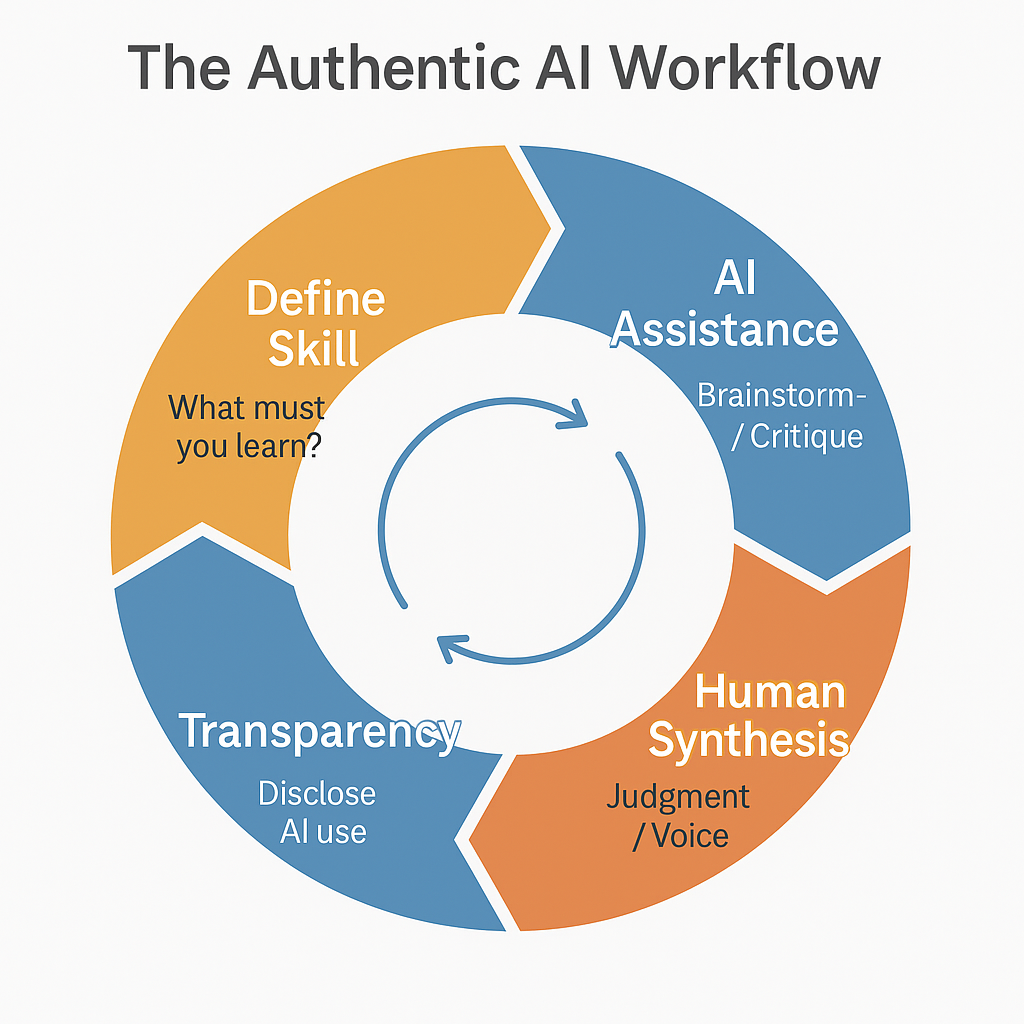
Traditional approaches to academic integrity focused on preventing plagiarism through detection. In the AI era, this approach is insufficient. A more comprehensive framework:
Reframe the Conversation
Move from: "Don't cheat"
Move to: "Develop genuine competence"
Students need to understand that academic integrity isn't about following rules—it's about developing real skills that will serve them professionally. When they outsource learning to AI or other sources, they cheat themselves of competence development.
Make Learning Visible
The Problem: Students don't understand what they're supposed to be learning
The Solution:
- Make learning objectives explicit and prominent
- Connect each assignment to specific skill development
- Show how skills build over time
- Explain what AI can't teach them
- Help students see their own growth
Design Plagiarism-Resistant Assignments
Characteristics of Resistant Assignments:
- Require application to specific, unique contexts
- Include process components (drafts, reflections, peer review)
- Connect to students' own experiences or interests
- Require integration of multiple sources or ideas
- Include oral explanation or defense of written work
- Build on previous assignments in the course
- Address authentic, complex problems without simple answers
Address Pressure Points
Students cheat most when:
- They feel overwhelmed by workload
- They believe they can't succeed through honest effort
- The assignment feels meaningless or purely punitive
- Consequences of failure seem catastrophic
- They see others cheating without consequences
Address these by:
- Designing manageable workloads
- Providing scaffolding for success
- Making purpose explicit
- Using specifications or labor-based grading
- Enforcing policies consistently and fairly
Use AI Productively
Rather than fighting AI, integrate it ethically:
- Teach students to use AI for brainstorming, not final products
- Have students critique and improve AI-generated content
- Make AI use transparent and required for specific purposes
- Teach students to recognize AI limitations and hallucinations
- Focus assessment on skills AI can't replicate (judgment, synthesis, application)
Create Culture of Integrity
Cultural elements:
- Talk about why integrity matters, not just what's prohibited
- Share stories of professional consequences of dishonesty
- Model integrity in your own work and admission of mistakes
- Make reporting easy and consequences predictable
- Celebrate authentic work and growth
- Build community where cheating feels like betraying peers
Respond to Violations Educationally
When academic dishonesty occurs:
- Investigate thoroughly and fairly
- Understand the student's situation and motivation
- Apply consequences consistently but with consideration
- Use the incident as a teaching opportunity
- Help students recover and move forward
- Document patterns for institutional action when needed
Remember: The goal isn't zero violations—it's maximum learning and skill development.
Teaching the Ethics of Persuasion
One of the most important ethical dimensions of business communication is helping students understand when persuasion crosses into manipulation.
The Persuasion vs. Manipulation Framework
Ethical Persuasion:
- Respects audience autonomy and judgment
- Provides accurate, complete information
- Uses emotional appeals to enhance understanding, not cloud judgment
- Aims for mutually beneficial outcomes
- Withstands scrutiny and sunlight
- Builds long-term trust and relationship
Manipulation:
- Exploits vulnerabilities or cognitive biases
- Withholds or distorts information
- Uses emotional appeals to bypass rational judgment
- Prioritizes persuader's interests over audience's
- Relies on deception or concealment
- Damages trust when revealed
Key Questions for Students
Teach students to evaluate persuasive communication by asking:
About Information:
- Am I presenting complete, accurate information?
- Am I withholding relevant facts that might change someone's decision?
- Am I using framing to mislead rather than clarify?
About Autonomy:
- Am I respecting the audience's right to make their own informed choice?
- Am I using pressure tactics that limit free choice?
- Would this still be persuasive if the audience had time to reflect?
About Outcomes:
- Is this genuinely in the audience's interest, or only in mine?
- Would I use this approach on someone I care about?
- Will the audience feel good about this decision long-term?
About Methods:
- Am I exploiting known vulnerabilities or cognitive weaknesses?
- Would I be comfortable if my persuasive methods were made public?
- Am I using emotional appeals to enhance or replace logical argument?
About Relationship:
- Does this build or damage long-term trust?
- How will the audience feel if they learn something I didn't tell them?
- Am I treating people as means to my end or as ends in themselves?
Teaching Strategies
Use Case Studies:
- Analyze real examples of persuasion that crossed lines
- Discuss marketing campaigns that faced backlash
- Examine political communication that manipulated
- Review sales tactics that damaged brand reputation
Create Ethical Dilemmas:
- Present scenarios with competing ethical considerations
- Have students defend different positions
- Discuss real-world constraints and pressures
- Explore consequences of different choices
Invite Guest Speakers:
- PR professionals who've faced ethical dilemmas
- Marketing leaders who prioritize ethical persuasion
- Journalists who expose manipulative communication
- Executives who've dealt with consequences of unethical communication
Require Ethical Justification:
- Every persuasive assignment should include ethical reflection
- Students should justify their strategic choices
- Peer review should include ethical evaluation
- Final portfolios should discuss ethical development
Cultivating Instructor Excellence and Professional Judgment

Your professional judgment and ethical modeling matter more than your curriculum content. Students learn ethics by observing how you:
Navigate Ambiguity and Complexity
Students notice when you:
- Acknowledge multiple valid perspectives
- Admit when you're uncertain
- Revise positions based on new information
- Balance competing principles thoughtfully
- Show respect for different viewpoints
They learn:
- Ethical judgment involves nuance
- Changing your mind shows strength
- Complexity deserves careful thought
- Disagreement can be respectful
- Professional humility is a virtue
Respond to Mistakes and Failures
Students notice when you:
- Admit your own errors openly
- Apologize when you've been unfair
- Correct misinformation you've shared
- Learn from teaching that didn't work
- Show vulnerability about limitations
They learn:
- Everyone makes mistakes
- Integrity requires acknowledging errors
- Growth comes from reflection
- Professional maturity includes humility
- Character shows in how we handle failures
Balance Care and Standards
Students notice when you:
- Hold high expectations while providing support
- Show compassion without lowering standards
- Distinguish between can't and won't
- Accommodate legitimate needs fairly
- Maintain boundaries with kindness
They learn:
- Excellence and care aren't mutually exclusive
- Standards matter because learning matters
- Professional judgment considers context
- Rules serve principles, not vice versa
- Consistency and flexibility can coexist
Demonstrate Integrity Under Pressure
Students notice when you:
- Follow your own policies even when inconvenient
- Treat all students equitably
- Speak truthfully even when difficult
- Prioritize learning over metrics
- Stand by principles despite costs
They learn:
- Integrity isn't situational
- Character is revealed under pressure
- Doing right matters more than being liked
- Professional ethics have real costs
- Some principles are worth defending
Model Lifelong Learning
Students notice when you:
- Stay current with field developments
- Incorporate new insights and approaches
- Acknowledge what you're learning
- Seek feedback on your teaching
- Show genuine intellectual curiosity
They learn:
- Learning never stops
- Expertise requires continuous growth
- Good professionals seek improvement
- Intellectual curiosity is professional
- Teaching and learning go together
Ethical Decision-Making Framework for Instructors
When facing ethical dilemmas in your teaching, use this framework:
1. Identify the Stakeholders
Who is affected by this decision?
- Students (individually and collectively)
- Colleagues and department
- Institution and profession
- Future employers and society
2. Clarify the Competing Values
What principles are in tension?
- Fairness vs. mercy
- Individual needs vs. collective good
- Policy consistency vs. contextual judgment
- Learning vs. grades/credentials
- Student satisfaction vs. rigorous standards
3. Consider the Consequences
What are likely outcomes of different choices?
- Short-term vs. long-term effects
- Intended vs. unintended consequences
- Effects on precedent and future cases
- Impact on various stakeholders
4. Consult Relevant Guidelines
What guidance exists?
- Institutional policies
- Professional codes of ethics
- Legal requirements
- Departmental norms
- Pedagogical best practices
5. Seek Counsel
Who can provide perspective?
- Experienced colleagues
- Department chair or dean
- Teaching center staff
- Professional mentors
- Ethics committee if available
6. Make a Principled Decision
Choose based on:
- Alignment with core values
- Defensibility to stakeholders
- Consistency with principles
- Consideration of consequences
- Your professional judgment
7. Document and Reflect
After deciding:
- Document rationale for the decision
- Communicate decision transparently
- Monitor consequences
- Reflect on what you learned
- Adjust future approach if needed
Common Ethical Dilemmas in Business Communication Teaching
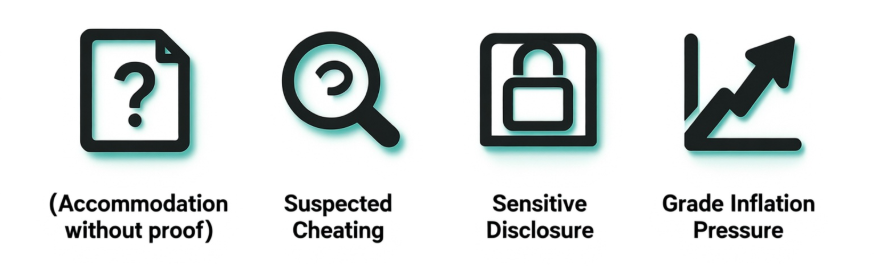
Dilemma: Student Requests Accommodation Without Documentation
The Tension: Compassion vs. fairness, trust vs. verification, flexibility vs. policy
Considerations:
- Is the request reasonable and time-limited?
- Does accommodating create unfair advantage?
- What does institutional policy require?
- What's your relationship with this student?
- Is there a pattern of requests?
Approaches:
- Offer accommodation available to all students
- Provide temporary flexibility while documentation is obtained
- Consult with disability services or dean of students
- Document decision and rationale
- Communicate boundaries clearly and kindly
Dilemma: Suspected But Not Provable Academic Dishonesty
The Tension: Innocent until proven guilty vs. professional judgment, policy vs. instinct
Considerations:
- What evidence exists?
- What's the institutional standard of proof?
- What are consequences of false accusation?
- What are consequences of ignoring violation?
- Have you documented concerns?
Approaches:
- Conference with student to explore
- Revise assignment to require in-person components
- Tighten policies for future assignments
- Consult academic integrity officer
- Document concerns without formal charges if proof is insufficient
Dilemma: Student Writes About Sensitive Personal Topic
The Tension: Supporting authenticity vs. protecting student, engagement vs. appropriate boundaries
Considerations:
- Is this disclosure appropriate for the assignment?
- Does student seem aware of implications?
- Are you equipped to respond effectively?
- What campus resources exist?
- What's your obligation to report?
Approaches:
- Acknowledge the writing's importance
- Connect student to appropriate resources
- Discuss whether this audience/context is best venue
- Clarify what you're required to report
- Maintain professional boundaries while showing care
Dilemma: Pressure to Inflate Grades or Lower Standards
The Tension: Student satisfaction vs. learning, institutional pressure vs. professional integrity
Considerations:
- Where is pressure coming from?
- What are consequences of resisting?
- How do your standards compare to norms?
- What's your evidence for current approach?
- What support exists for maintaining standards?
Approaches:
- Document your pedagogical rationale
- Show evidence of student learning
- Seek department/institution support
- Distinguish reasonable flexibility from grade inflation
- Stand firm on core principles while considering feedback
The Bottom Line on Ethics and Professional Judgment
Teaching business communication ethically requires:
- ✓ Vigilance about hidden ethical landmines in curriculum
- ✓ Proactive approaches to academic integrity that focus on learning
- ✓ Explicit instruction about persuasion ethics and boundaries
- ✓ Personal modeling of integrity, judgment, and professional excellence
- ✓ Thoughtful frameworks for navigating complex ethical dilemmas
- ✓ Commitment to growth in your own ethical awareness and practice
- ✓ Balance between principles and compassion, standards and flexibility
Ethics isn't a single chapter or lecture—it's woven throughout every interaction, assignment, and decision. Your students will remember not just what you taught about ethics, but how you embodied ethical professional judgment in your teaching.
The articles and frameworks on this pillar page provide guidance for cultivating ethical awareness, making sound judgments, and developing the professional excellence that earns student trust and shapes future ethical professionals.
Explore the Hub Pages
Ready to dive deeper into ethical teaching dimensions? Each hub page provides comprehensive coverage with detailed articles:
- Ethics & Academic Integrity →
Identify hidden ethical landmines in your curriculum, develop comprehensive approaches to academic integrity, and teach students the crucial distinction between persuasion and manipulation. - Professional Identity & Instructor Excellence →
Explore the essential traits of excellent business communication instructors and how to cultivate the professional judgment that models ethical practice for students.
Additional Resources
- All 6 Pillars Overview
- AI & Technological Transformation Pillar
- Textbook Adoption & Features Pillar
- Teaching Strategies & Innovation Pillar
- Student Experience & Motivation Pillar
- Meta: Trends & Frameworks Pillar
Last updated: November 2025 | Total hub pages: 2 | Total cluster articles: 4