
Navigating the Seismic Shifts in Business Communication Education

Business communication teaching is experiencing a period of unprecedented change. AI has gone from science fiction to standard workplace tool in just a few years. Generational shifts are transforming how students learn, process information, and engage with content. Neuroscience is revealing why some teaching approaches work while others fail. And microtrends—small but significant changes in student behavior, workplace expectations, and communication technologies—are accumulating into major transformations.
Yet many instructors teach the way they've always taught, unaware of how dramatically the landscape has shifted beneath them. The result? Growing gaps between what we teach and what students need, between how we instruct and how students learn, between our classrooms and the workplaces students will enter.
This pillar page offers strategic insights into the trends reshaping business communication teaching. It's designed for instructors who want to stay ahead of change rather than react to it, who seek to understand the deeper patterns driving surface-level changes, and who recognize that effective teaching requires continuous adaptation informed by evidence and insight.
Why Strategic Awareness Matters
Teaching without awareness of broader trends is like navigating without a map. You might reach your destination through familiar routes, but you'll miss better paths and fail to anticipate obstacles.
Strategic awareness of trends enables you to:
Anticipate Rather Than React
- See changes coming before they disrupt your teaching
- Prepare students for emerging workplace realities
- Adapt curriculum proactively rather than frantically
- Position yourself as a forward-thinking educator
- Reduce disruption by staying ahead of change
Make Evidence-Informed Decisions
- Ground choices in research rather than intuition alone
- Evaluate claims about new teaching approaches
- Distinguish trends from fads
- Invest effort in changes that matter
- Avoid wasting time on ineffective innovations
Connect Individual Challenges to Larger Patterns
- Recognize when your struggles reflect broader shifts
- Find solidarity with colleagues facing similar changes
- Access resources developed to address common challenges
- Avoid personalizing structural problems
- Contribute to collective solutions
Enhance Your Professional Development
- Identify skills you need to develop
- Find relevant professional learning opportunities
- Stay current in your field
- Maintain competitive advantage in academic job market
- Reignite intellectual curiosity about teaching
Better Serve Your Students
- Prepare them for the actual workplace they'll enter
- Teach skills that will remain relevant
- Model lifelong learning and adaptation
- Help them navigate their own transitions
- Ensure educational value of their investment
Two Dimensions of Strategic Insight
1. Instructor FAQs & Adoption
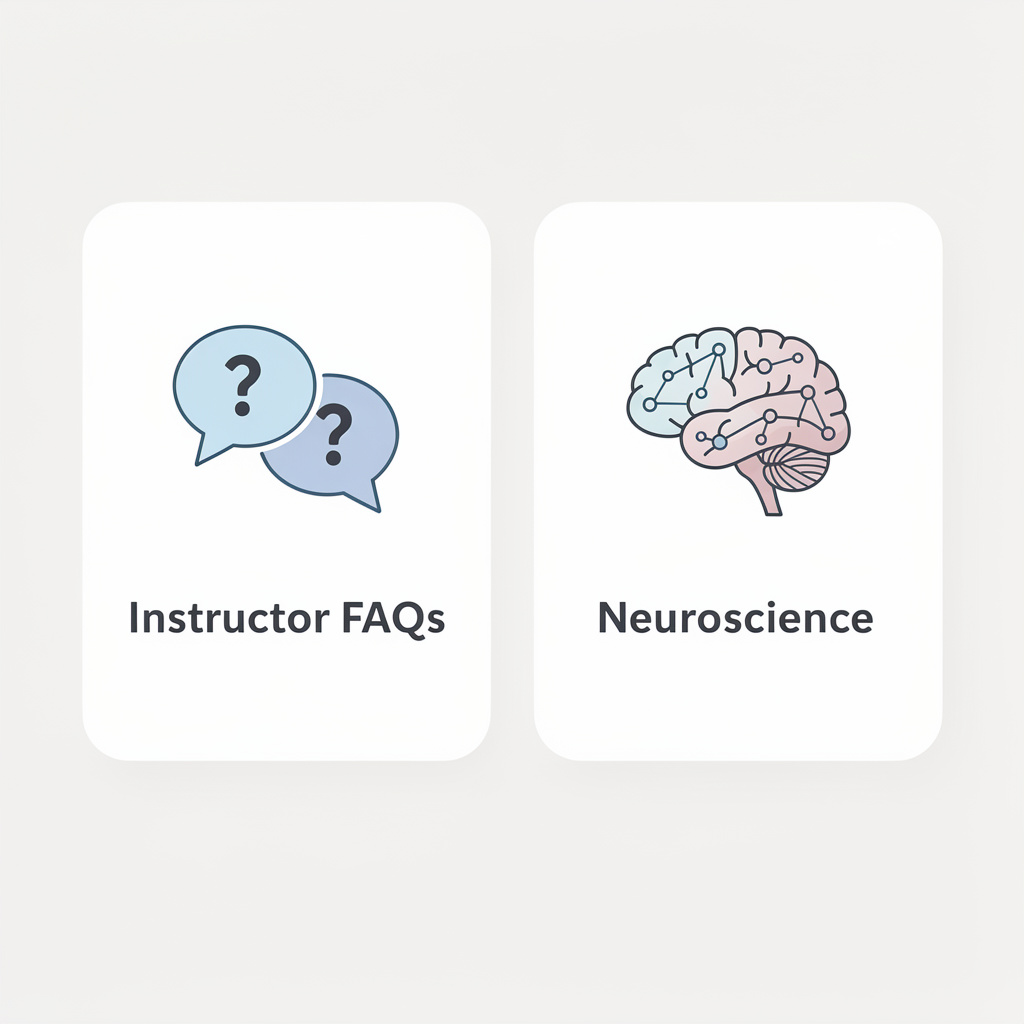
Understanding common questions, misconceptions, and emerging microtrends helps you navigate the evolving landscape of business communication teaching with confidence.
Key Topics:
- Critical questions instructors are asking about GenAI adoption and integration
- Common misconceptions about business communication instructors and courses that limit effectiveness
- Microtrends reshaping business communication that many instructors are missing
Featured Articles:
- Questions Business Communication Instructors Ask GenAI Relating to Adoption
- What Are the Common Misconceptions About Business Communication Instructors and the Course They Teach
- What Microtrends Are Reshaping Business Communication and Are You Missing Them
2. Neuroscience & Learning Science
Research in neuroscience and cognitive psychology reveals why some teaching approaches work while others fail, providing evidence-based foundations for instructional decisions.
Key Topics:
- How top communicators use brain science to craft messages that stick
- The neuroscience behind why some messages are remembered while others are forgotten
- Research-backed patterns and practices for effective business communication instruction
Featured Articles:
- How Do Top Business Communicators Use Brain Science to Craft Irresistible Messages
- Why Do Some Business Messages Stick While Others Are Instantly Forgotten—The Neuroscience Behind Effective Writing
- Research-Backed Patterns in Business Communication
Major Trends Reshaping Business Communication Teaching
Trend 1: The AI Revolution's Impact on Teaching and Learning
What's Changing:
- AI tools democratize content creation previously requiring specialized skills
- Traditional assignments (essays, reports, presentations) become trivial to automate
- Assessment must shift toward measuring judgment, not just production
- Students need AI literacy as a fundamental workplace competency
- Instructors must distinguish human from AI-generated work
Teaching Implications:
- Design assignments AI can't complete or that require AI use transparently
- Focus assessment on processes, judgment, and application rather than products alone
- Teach students to use AI as a tool while maintaining authentic voice
- Integrate AI ethics and responsible use throughout curriculum
- Model effective AI use in your own teaching and communication
Strategic Questions:
- Which of your current assignments would become meaningless with AI?
- What skills can you teach that AI cannot replicate?
- How can you leverage AI to improve rather than replace learning?
- What do employers expect graduates to know about AI?
Trend 2: Attention Economy and Cognitive Overload
What's Changing:
- Student attention spans continue declining amid digital distraction
- Information overload makes prioritization increasingly difficult
- Multitasking becomes default but degrades deep learning
- Traditional lecture formats compete poorly for cognitive resources
- Students expect bite-sized, immediately applicable content
Teaching Implications:
- Design instruction for fragmented attention (microlearning, active engagement)
- Reduce cognitive load through clear structure and focused content
- Build in frequent breaks and attention resets
- Use multimedia strategically to enhance rather than fragment attention
- Teach students attention management as a professional skill
Strategic Questions:
- How long can your students sustain focused attention?
- What competes for their cognitive resources during class?
- Which parts of your content truly require sustained focus?
- How can you make essential content more cognitively accessible?
Trend 3: Generational Shifts in Communication Preferences
What's Changing:
- Gen Z prefers video and voice over text-based communication
- Visual communication (memes, TikTok, Instagram) dominates their information consumption
- Authenticity and transparency matter more than polish
- Collaborative and iterative processes feel more natural than individual composition
- Traditional professional norms (formality, hierarchy) feel antiquated
Teaching Implications:
- Integrate video and multimedia creation into curriculum
- Teach visual literacy and design thinking
- Balance authentic voice with professional polish
- Incorporate collaborative writing and communication
- Help students code-switch between contexts rather than imposing single standard
Strategic Questions:
- Are you teaching communication preferences that students will actually use?
- How can you honor their natural communication modes while building professional versatility?
- What aspects of traditional business communication remain valuable?
- Where should you adapt and where should you hold firm?
Trend 4: Globalization and Cultural Complexity
What's Changing:
- Distributed teams and global business create need for intercultural competence
- Cultural diversity within U.S. workplaces increases
- Communication across differences becomes core competency, not special skill
- Monolingual, monocultural approaches become inadequate
- Power dynamics and privilege affect communication in visible ways
Teaching Implications:
- Integrate intercultural communication throughout course, not as single unit
- Use diverse examples and case studies
- Address power dynamics explicitly
- Teach code-switching and communication versatility
- Help students recognize their own cultural assumptions
Strategic Questions:
- Do your examples reflect workplace diversity students will encounter?
- Are you teaching U.S. norms as universal or as context-specific?
- How well are you preparing students to communicate across differences?
- What implicit cultural assumptions shape your teaching?
Trend 5: Mental Health and Wellbeing Focus
What's Changing:
- Anxiety and depression rates continue rising, especially among students
- Mental health discussions become normalized and expected
- Communication apprehension affects significant percentage of students
- Trauma-informed teaching practices gain recognition
- Student wellbeing increasingly recognized as precondition for learning
Teaching Implications:
- Design psychologically safe learning environments
- Provide scaffolding for high-anxiety tasks (presentations, feedback)
- Offer flexibility while maintaining standards
- Address communication apprehension explicitly
- Connect students to campus mental health resources when appropriate
Strategic Questions:
- How does your course design accommodate students experiencing anxiety?
- Are you creating psychological safety or inadvertent stress?
- Where can you build flexibility without sacrificing learning?
- How can you support student wellbeing within your role?
Trend 6: Emphasis on Authentic Assessment
What's Changing:
- Traditional tests and essays fail to measure real-world competence
- Employers want demonstrated skills, not just grades
- Portfolios and performance assessments gain credibility
- Students demand evidence that assignments prepare them for careers
- Specifications and labor-based grading offer alternatives to points
Teaching Implications:
- Design assessments that mirror workplace communication challenges
- Create authentic audiences and purposes for student work
- Build portfolios that document skill development over time
- Use real client projects when possible
- Consider alternative grading approaches that focus on learning
Strategic Questions:
- Do your assessments measure what employers actually value?
- Could a student earn an A without developing genuine competence?
- What would authentic assessment look like in your course?
- How can you make learning rather than points the focus?
Microtrends Often Missed by Instructors
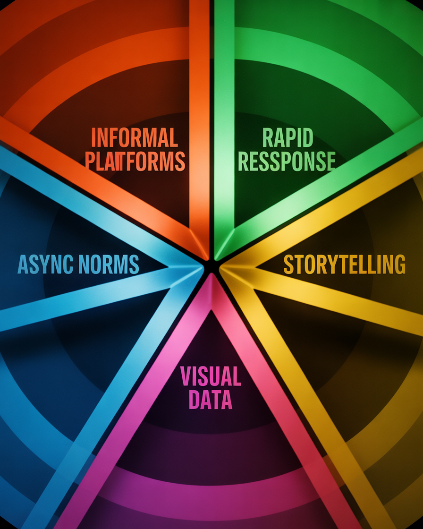
Beyond major trends, smaller shifts accumulate into significant changes. Watch for these microtrends:
The Rise of Async Communication Norms
Students increasingly prefer async communication (text, email, recorded video) over synchronous (calls, meetings, live presentations). This isn't laziness—it's adaptation to distributed work, global teams, and cognitive load management.
Teaching Response: Teach both modes effectively rather than privileging synchronous communication as inherently better.
The Professionalization of Informal Platforms
TikTok, Instagram, and Discord increasingly serve professional purposes, not just social ones. Students may establish professional presence on platforms you consider frivolous.
Teaching Response: Acknowledge platform diversity in professional communication rather than insisting on LinkedIn and email only.
The Decline of Email Formality
Especially in tech and startup cultures, email norms are becoming more conversational. Students entering these environments find traditional business email overly formal.
Teaching Response: Teach context-appropriate communication rather than single "correct" email format. Emphasize audience analysis.
The Expectation of Rapid Response
Workplace communication increasingly expects quick turnaround. Students entering professional environments face pressure to respond fast.
Teaching Response: Teach efficiency and prioritization alongside quality. Discuss managing response expectations.
The Integration of Data Visualization
Charts, graphs, and infographics have moved from specialized skill to baseline expectation across roles.
Teaching Response: Integrate data visualization throughout course, not just in reports unit.
The Blurring of Personal and Professional Identity
Social media makes separating personal and professional personas difficult. Students need to navigate integrated identity.
Teaching Response: Discuss strategic self-presentation across contexts rather than strict separation.
The Importance of Storytelling
Even technical communication increasingly values narrative structure and emotional engagement.
Teaching Response: Teach storytelling principles across all business communication genres.
Leveraging Neuroscience for Better Teaching
Research in neuroscience and cognitive psychology provides evidence for why certain teaching approaches work:
The Spacing Effect
The Science: Learning distributed over time produces better retention than massed practice.
Teaching Application:
- Space similar skills across multiple weeks rather than condensing into single unit
- Build spiral curriculum where concepts revisit at increasing complexity
- Use frequent low-stakes quizzes rather than few high-stakes exams
- Return to key concepts throughout semester
The Testing Effect
The Science: Retrieval practice (testing) enhances learning more than re-reading or review.
Teaching Application:
- Use frequent formative assessments
- Have students practice retrieving information before presenting it
- Make students explain concepts to each other
- Use exit tickets and reflection prompts
Cognitive Load Theory
The Science: Working memory has limited capacity; overload prevents learning.
Teaching Application:
- Break complex tasks into manageable chunks
- Provide worked examples before independent practice
- Use dual coding (verbal + visual) strategically
- Remove extraneous cognitive demands
- Scaffold progressively to build capacity
The Generation Effect
The Science: Information generated by learners is remembered better than information passively received.
Teaching Application:
- Have students create examples rather than just consuming them
- Use discovery learning and inductive teaching when appropriate
- Engage students in active problem-solving
- Let students teach concepts to peers
Emotional Arousal and Memory
The Science: Emotional experiences create stronger memories than neutral ones.
Teaching Application:
- Use stories, especially those involving conflict or surprise
- Create memorable moments in class (demonstrations, debates, simulations)
- Connect content to students' personal experiences and emotions
- Use humor strategically (but inclusively)
The Picture Superiority Effect
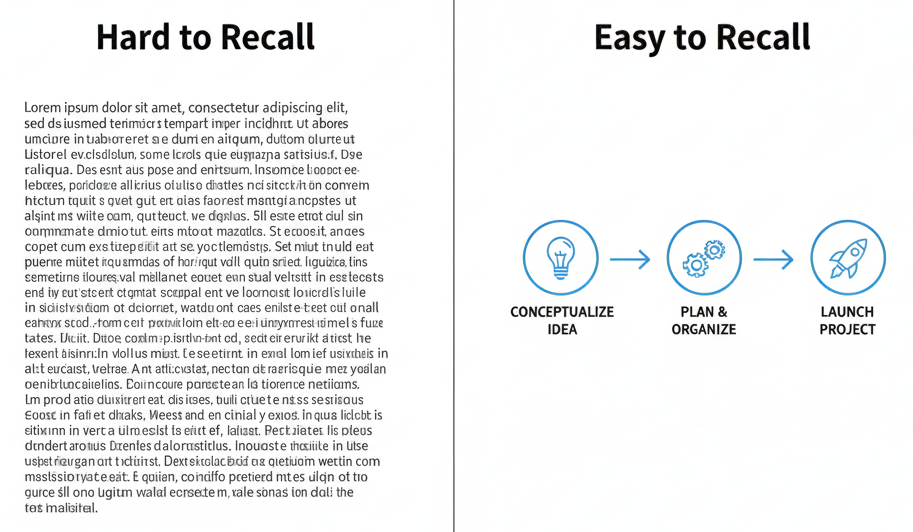
The Science: Images are remembered better than words.
Teaching Application:
- Use relevant visuals to reinforce key concepts
- Teach students to create visual representations
- Use diagrams and infographics for complex information
- Be strategic—irrelevant images create cognitive load
Social Learning
The Science: Humans learn effectively through observation, imitation, and social interaction.
Teaching Application:
- Model the skills and behaviors you want students to develop
- Use peer learning and collaboration
- Create community in your classroom
- Share stories of professionals modeling target behaviors
Misconceptions That Limit Teaching Effectiveness
Strategic awareness requires recognizing and correcting common misconceptions:
Misconception: "Students today are lazy and entitled"
Reality: Students face unprecedented cognitive load, economic pressure, and mental health challenges. What looks like laziness is often overwhelm.
Better Frame: "How can I design learning that works with student realities rather than against them?"
Misconception: "Business communication is a service course with low status"
Reality: Communication competence is among the most valued workplace skills. Your course potentially has more career impact than disciplinary courses.
Better Frame: "How can I leverage the importance of communication skills to enhance course reputation and student engagement?"
Misconception: "Good writing is good writing—one standard applies universally"
Reality: Effective communication is context-dependent. Different audiences, purposes, and platforms require different approaches.
Better Frame: "How do I teach students to analyze context and adapt their communication strategically?"
Misconception: "Technology is making students worse communicators"
Reality: Students communicate more than any previous generation, just through different modes. Technology changes communication but doesn't inherently degrade it.
Better Frame: "How do I help students leverage technology effectively while developing timeless communication principles?"
Misconception: "Students need to learn traditional business communication first, then adapt"
Reality: Students learn better when instruction connects to their existing communication experiences and gradually builds professional versatility.
Better Frame: "How can I meet students where they are and expand their communication repertoire?"
Misconception: "Research and theory are impractical—teaching is an art"
Reality: While teaching involves artistry, research provides evidence about what works. Ignoring evidence means repeating ineffective practices.
Better Frame: "How can I use research to inform my teaching artistry and improve outcomes?"
Building Your Strategic Awareness Practice
Staying strategically aware requires intentional practice:
Read Strategically
- Follow key thought leaders in business communication and pedagogy
- Subscribe to teaching journals and blogs
- Scan headlines in business and technology news
- Join professional organizations and engage with resources
- Allocate regular time for professional reading
Engage with Colleagues
- Share observations about changes you're noticing
- Attend conferences and workshops
- Participate in teaching circles or book groups
- Seek mentorship from experienced colleagues
- Collaborate on innovations and share results
Observe Student Behavior
- Pay attention to patterns in how students engage
- Ask students about their communication habits and preferences
- Notice what resonates and what falls flat
- Gather feedback formally and informally
- Treat your classroom as a research site
Experiment Thoughtfully
- Try new approaches in low-risk ways
- Document what you try and what happens
- Assess impact on student learning
- Share findings with colleagues
- Build evidence for what works in your context
Reflect Regularly
- Keep a teaching journal to capture insights
- Review what worked and what didn't each semester
- Identify patterns across multiple terms
- Connect experiences to broader trends
- Plan adjustments based on evidence and reflection
Questions for Strategic Reflection
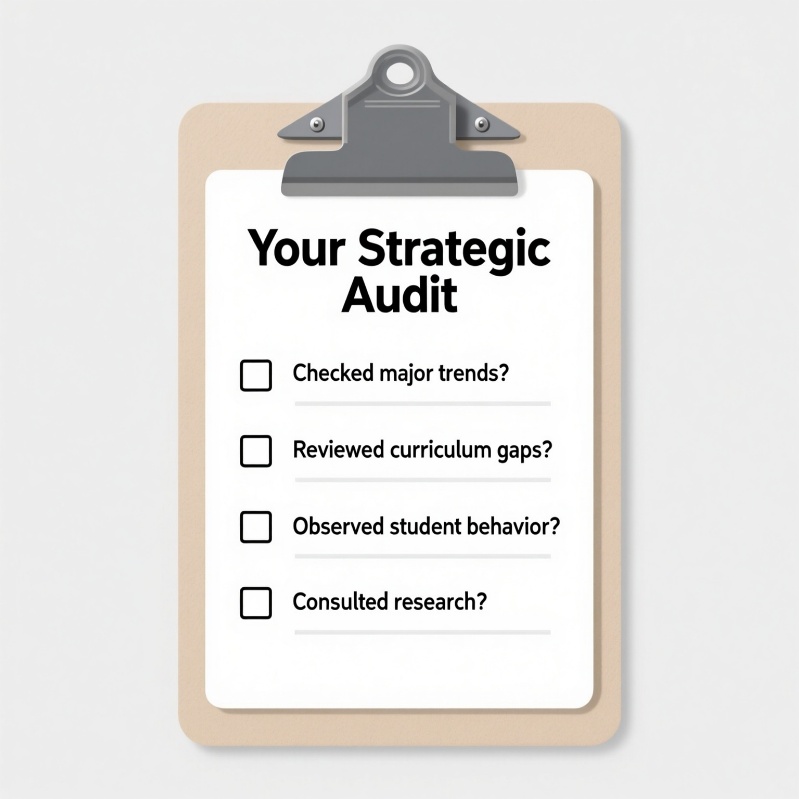
Use these questions to assess your strategic awareness and identify growth areas:
About Your Awareness
- What major trends in business communication teaching am I aware of?
- Where do I get information about developments in my field?
- How do I distinguish meaningful trends from temporary fads?
- What am I likely missing because of my own blind spots or biases?
About Your Curriculum
- When did I last significantly revise my course content or approach?
- What am I teaching because it's always been taught rather than because it's essential?
- Which of my assignments would become obsolete with current or emerging technologies?
- Where are the biggest gaps between my curriculum and workplace realities?
About Your Students
- What generational characteristics do I observe in current students?
- How have student behaviors and preferences changed during my teaching career?
- What challenges do today's students face that previous generations didn't?
- How well do I understand my students' actual communication habits and contexts?
About Evidence and Research
- How much of my teaching is based on evidence vs. tradition or intuition?
- What pedagogical research influences my teaching approach?
- How do I evaluate new teaching strategies or technologies?
- Where would research-informed changes most improve my teaching?
About Professional Growth
- What new skills or knowledge would help me teach more effectively?
- How do I stay current in my field?
- What professional development opportunities have I pursued recently?
- Where is my teaching stuck in patterns that no longer serve?
The Bottom Line on Strategic Insights
Strategic awareness transforms teaching from reactive scrambling to proactive adaptation. When you understand:
- ✓ The major trends reshaping business communication and teaching
- ✓ The microtrends accumulating into significant changes
- ✓ The neuroscience explaining why some approaches work better than others
- ✓ The misconceptions limiting your effectiveness
- ✓ The evidence supporting pedagogical decisions
- ✓ The questions driving ongoing growth and adaptation
You can teach with confidence that your approach is both current and grounded, relevant and effective, responsive to student needs and aligned with workplace realities.
The articles and frameworks on this pillar page provide the strategic insights you need to navigate change, make evidence-informed decisions, and position yourself as a forward-thinking educator who prepares students not just for today's workplace, but for the future they'll actually inhabit.
Explore the Hub Pages
Ready to dive deeper into strategic insights? Each hub page provides comprehensive coverage with detailed articles:
- Instructor FAQs & Adoption →
Discover the questions instructors are asking about AI adoption, common misconceptions limiting effectiveness, and microtrends reshaping business communication. - Neuroscience & Learning Science →
Learn how brain science and cognitive research reveal why some teaching approaches work while others fail, and how to apply these insights to your instruction.
Additional Resources
- All 6 Pillars Overview
- AI & Technological Transformation Pillar
- Textbook Adoption & Features Pillar
- Teaching Strategies & Innovation Pillar
- Student Experience & Motivation Pillar
- Ethics & Professional Judgment Pillar
Last updated: November 2025 | Total hub pages: 2 | Total cluster articles: 6