This Site Is Under Construction
The Business Communication Teaching and Learning System
A Complete Framework for Instruction, Engagement, and Professional Readiness
How This System Supports Confident, Coherent Teaching
Most teaching resources are built as collections. This one was built as a system.
Over time, business communication instruction—especially at the intersection of AI, ethics, neuroscience, and workplace realism—has become increasingly fragmented. Strong ideas exist, but they are often scattered across articles, activities, tools, and supplements with little guidance on how they fit together or how instructors might use them strategically across a course or curriculum. This site was intentionally designed to solve that problem.
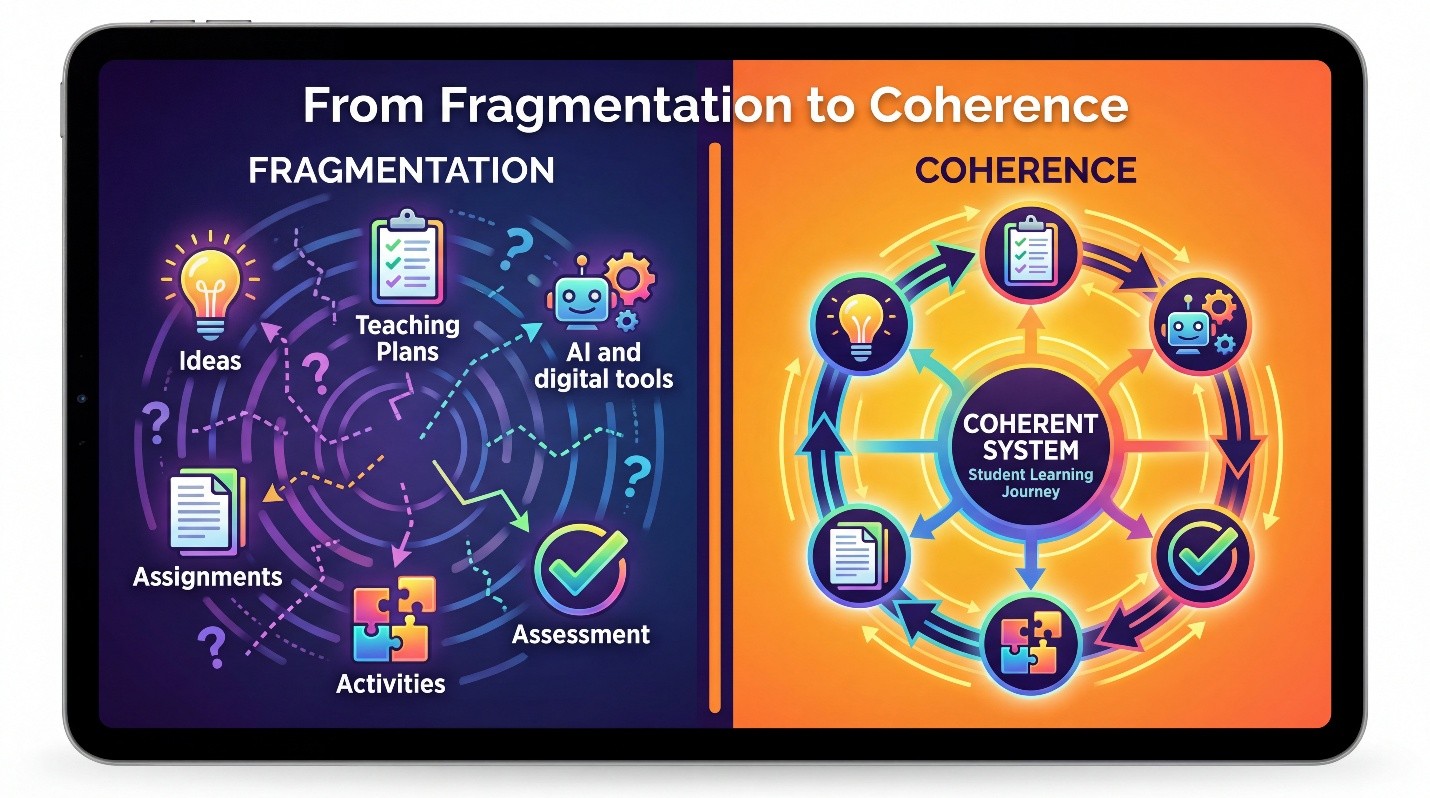
Teaching today asks instructors to guide powerful tools, uphold responsibility, and help learning travel beyond the classroom. Coherence makes that work sustainable.
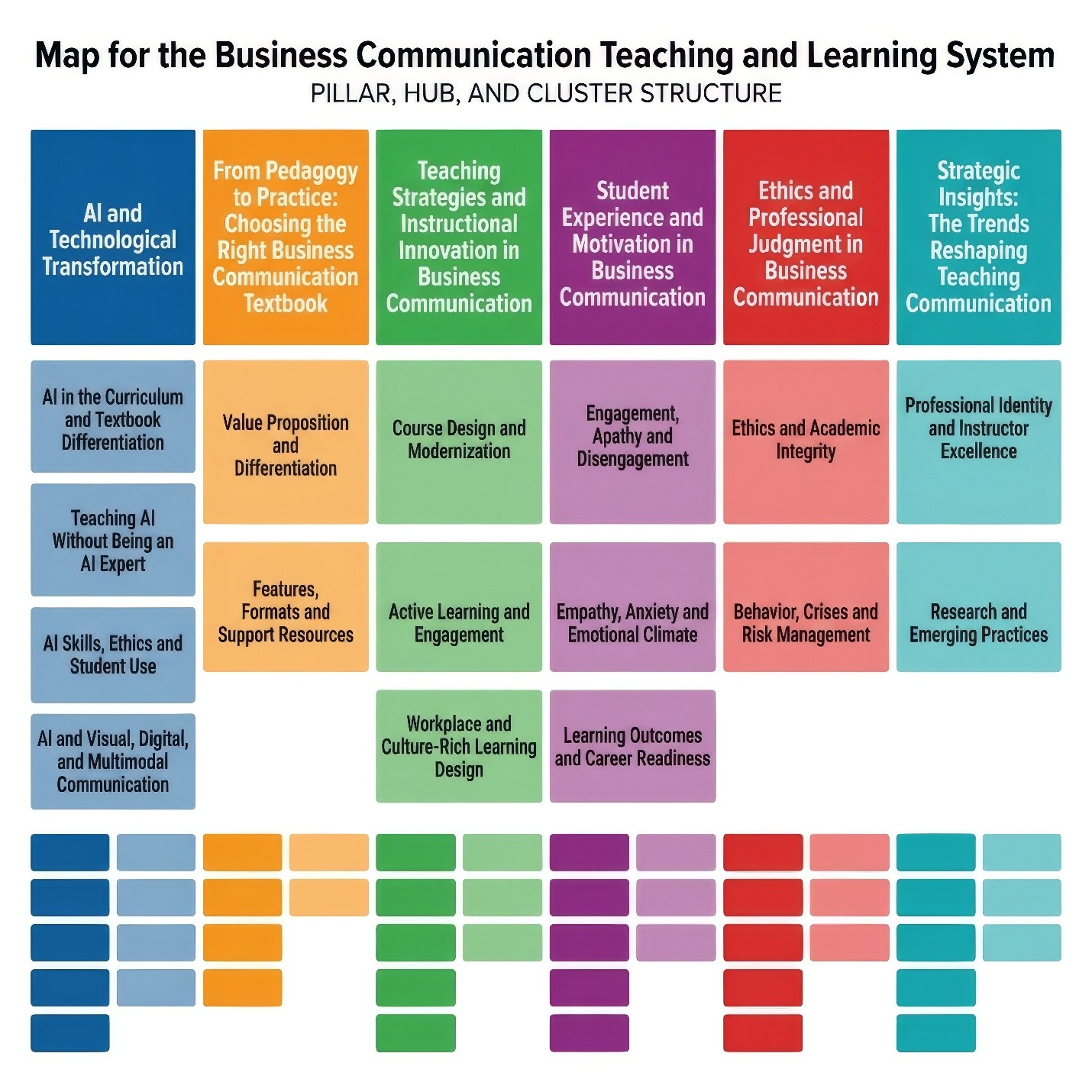
The system exists to help instructors see the whole architecture at once—to understand not just what resources are available, but how they relate, why they are grouped the way they are, and how they can be used flexibly in real teaching contexts. The learning map you’ll encounter shortly is the visual expression of that architecture.
How the Pillar–Hub–Cluster Structure Works
Pillars: Strategic Foundations
Pillars represent the core instructional commitments of the system. Each pillar addresses a fundamental challenge in teaching business communication—such as preparing students for AI-augmented work, developing ethical judgment, supporting transfer of learning, or designing instruction that aligns with how students actually learn.
Pillars answer the “why” behind the system. They provide a stable conceptual foundation that allows instructors to see the long-term goals driving every resource, rather than encountering isolated activities without context.
Hubs: Instructional Pathways
Within each pillar are hubs. Hubs translate broad goals into coherent instructional pathways by grouping related teaching concerns such as assessment, feedback, collaboration, revision, decision-making, or reflection.
Hubs answer the “how” of instruction. They show how abstract goals become teachable practices and how strategies reinforce one another rather than compete for attention.
Clusters: Classroom-Ready Applications
Clusters sit within hubs and provide practical, classroom-ready resources. Each cluster focuses on a specific teaching challenge or learning outcome and includes frameworks, visuals, checklists, examples, and guidance that can be used immediately—at the instructor’s discretion.
Clusters answer the “what do I do next?” question. They are intentionally modular, designed to be used independently, sequenced across a course, or combined across hubs and pillars without breaking the logic of the system.
Below is the learning map that brings this system together—showing how pillars, hubs, and clusters connect to form a coherent, flexible framework for real teaching.
Why This Structure Works in Real Teaching
Because the system is organized as a system rather than a collection, instructors can:
- Move fluidly from big-picture strategy to day-to-day teaching decisions
- Understand how individual activities support larger learning goals
- Adapt resources to their own courses without losing coherence
- Revisit the same pillar through different hubs as student needs evolve
Instructors can return to the same pillar multiple times across a course or program, drawing on different hubs and clusters as assignments become more complex and expectations shift.
In short, the pillar–hub–cluster structure enables instructors to teach with intention rather than improvisation—while preserving the flexibility, judgment, and professional autonomy that effective teaching requires.