
Instructors can help students overcome anxiety, build confidence, and develop communication skills through supportive strategies.
Help Students Overcome Anxiety, Build Communication Confidence
As an instructor, you play a crucial role in helping students develop effective communication skills. However, many students experience debilitating anxiety and apprehension when faced with communication tasks, hindering their ability to reach their full potential. This article provides you with practical strategies and techniques to create a supportive learning environment, help students build confidence and competence in communication, and address anxiety and apprehension.
Understanding the Complexities of Communication Anxiety
Communication anxiety is a pervasive issue, affecting up to 70% of students. To develop effective interventions, it's essential to understand the underlying causes, including:
Fear of negative evaluation: The fear of being judged or evaluated negatively by others.
Perfectionism: The need to perform flawlessly, leading to unrealistic expectations.
Lack of experience or preparation: Insufficient practice or preparation, exacerbating anxiety.
Previous negative experiences: Traumatic or distressing experiences that create lasting anxiety.
Low self-efficacy in communication skills: Doubts about one's ability to communicate effectively.
Creating a Supportive Learning Environment
To reduce communication anxiety, create a psychologically safe classroom environment by:
Establishing clear ground rules: Set expectations for respectful communication and behavior, and ensure students understand the importance of constructive feedback.
Modeling supportive behavior: Demonstrate constructive feedback and empathy by actively listening to students, providing specific, effort-based praise, and acknowledging their concerns.
Encouraging peer support: Foster a sense of community and collaboration by incorporating group work, peer review, and discussions that promote mutual respect and understanding.
Celebrating effort and improvement: Recognize progress, not just outcomes, and provide opportunities for students to reflect on their growth and development.
Normalizing mistakes: Emphasize that errors are an essential part of the learning process, and encourage students to view mistakes as opportunities for growth.
Implementing a Growth Mindset Approach
Adopt Carol Dweck's growth mindset theory to impact students' approach to communication challenges:
Emphasize the malleability of communication skills: Highlight that skills can be developed through practice, effort, and persistence.
Reframe mistakes as learning opportunities: View errors as chances for growth, and encourage students to do the same.
Encourage students to set process-oriented goals: Help students focus on progress, not just outcomes, and set achievable goals that promote growth.
Provide specific, effort-based praise: Recognize students' hard work and dedication, and provide feedback that promotes self-efficacy.
Gradual Exposure and Skill-Building Techniques
Use systematic desensitization, a technique borrowed from cognitive-behavioral therapy, to help students gradually build confidence in communication:
Start with low-stakes activities: Begin with small group discussions or short writing exercises, and gradually increase complexity and audience size.
Use visualization and role-playing exercises: Practice communication scenarios in a low-risk environment, and encourage students to reflect on their experiences.
Implement frequent, brief practice sessions: Regularly reinforce new skills, and provide opportunities for students to practice and receive feedback.
Practical Exercises and Strategies
Public Speaking
Breathing exercises and progressive muscle relaxation: Teach students techniques to manage physical anxiety symptoms, such as deep breathing and relaxation exercises.
Video self-analysis with guided reflection: Have students record themselves speaking, and provide guided reflection to help them identify areas for improvement.
Impromptu speaking games: Incorporate games that promote spontaneous communication, such as "Just a Minute" or "Two Truths and a Lie."
Virtual reality practice environments: Utilize virtual reality tools to simulate real-world speaking scenarios, and provide students with a safe space to practice.
Writing
Freewriting and brainstorming techniques: Encourage students to generate ideas and overcome writer's block using freewriting and brainstorming exercises.

Use structured outlining and prewriting exercises to teach students clear, organized, and effective writing skills.
Structured outlining and prewriting exercises: Teach students to develop clear, organized writing by using structured outlining and prewriting exercises.
Peer review workshops with clear rubrics: Provide students with opportunities to receive constructive feedback from peers, and ensure they understand the importance of clear rubrics.
Timed writing practice: Help students build fluency and writing efficiency by incorporating timed writing exercises.
Interpersonal Communication
Active listening exercises: Teach students to develop attentive and empathetic listening skills through active listening exercises.
Role-playing difficult conversations: Practice effective conflict resolution by role-playing difficult conversations, and encourage students to reflect on their experiences.
Nonverbal communication awareness activities: Incorporate activities that promote awareness of nonverbal communication, such as body language and tone.
Conflict resolution scenarios: Provide students with opportunities to practice resolving disputes, and encourage them to develop strategies for effective conflict resolution.
Leveraging Technology and Resources
Incorporate digital tools to enhance practice and feedback:
Speech analysis software: Utilize tools like Orai or VirtualSpeech to provide students with feedback on their speech.
Writing assistance tools: Leverage Grammarly or Hemingway Editor to support students' writing development.
Online discussion forums: Foster peer support and community engagement through online discussion forums.
Microlearning modules: Provide targeted skill development and practice through microlearning modules.
Building Metacognitive Skills
Help students develop metacognitive skills by:
Implementing regular self-assessment exercises: Encourage students to reflect on their communication processes, and identify areas for improvement.
Using learning journals: Have students track their progress, challenges, and growth, and provide opportunities for reflection.
Teaching goal-setting and planning strategies: Empower students to set achievable goals, and develop strategies for achieving them.
Encouraging students to develop personalized anxiety management plans: Help students create tailored strategies for managing anxiety, and provide support and guidance.
Incorporating Authentic Assessment
Move beyond traditional grading to reduce anxiety:
Using portfolio assessments: Showcase students' progress and growth over time, and provide opportunities for reflection.
Implementing project-based learning: Apply communication skills to real-world scenarios, and encourage students to develop practical solutions.
Offering multiple modes of presentation: Allow students to choose their preferred format, and provide opportunities for practice and feedback.
Using formative assessments: Guide instruction and provide regular feedback, rather than relying solely on summative assessments.
Professional Development
Equip yourself with the tools to address communication anxiety by:
Seeking training in anxiety recognition and intervention strategies: Develop your awareness and skills in addressing communication anxiety.
Participating in workshops on creating inclusive, low-anxiety classrooms: Foster a supportive learning environment by incorporating strategies and techniques from workshops.
Collaborating with counseling services: Provide resources for severe cases, and work with counseling services to support students.
Engaging in ongoing peer support and best practice sharing: Collaborate with colleagues to share strategies and best practices, and support one another in addressing communication anxiety.
By implementing these strategies and techniques, you can create a supportive and inclusive learning environment that fosters confident, effective communicators. Remember, addressing communication anxiety is an ongoing process that requires patience, empathy, and understanding.
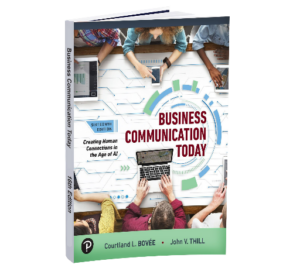 Unlocking Student Potential: The Comprehensive Approach of Business Communication Today to Address Communication Anxiety and Apprehension
Business Communication Today is an ideal textbook for addressing student apprehension and anxiety about communication skills due to its comprehensive, supportive approach. Designed with a focus on practical, real-world applications, this textbook provides a structured framework that helps students develop their communication abilities with confidence.
One of the textbook’s key strengths is its emphasis on building competence through step-by-step guidance. It breaks down complex communication tasks into manageable components, enabling students to gradually develop their skills. For example, Business Communication Today offers clear strategies for effective business writing, public speaking, and digital communication, including techniques for managing nervousness and overcoming anxiety. By presenting these strategies in an organized and accessible manner, the book empowers students to approach communication challenges incrementally.
Business Communication Today also integrates a variety of practical exercises and real-world examples that reinforce key concepts and build student confidence. These exercises provide structured opportunities for practice and feedback, helping students refine their skills in a low-risk environment. Additionally, the textbook features case studies and workplace scenarios from diverse industries, allowing students to connect the material to real-life applications and see its relevance to their own experiences—further easing apprehension.
Another vital aspect of the textbook is its emphasis on constructive feedback and continuous improvement. By encouraging students to see feedback as a tool for growth rather than criticism, it helps alleviate the fear of making mistakes. This positive approach fosters a learning environment where students feel supported, enabling them to develop communication skills more effectively and with greater confidence.

