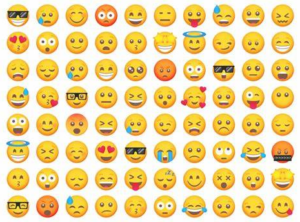
Mastering emoji use: Enhance business communication with impactful and professional visual expression.
As instructors of business communication, we have observed a fascinating shift in recent years: the integration of emojis into professional contexts. Once dismissed as frivolous or unprofessional, these tiny pictographs are now transforming the way we interact in the business world. This presents an exciting opportunity to incorporate visual communication skills into our curriculum, equipping students with the tools necessary to navigate this evolving linguistic landscape effectively.
The Power of Visual Communication in a Text-Based World
Emojis offer a distinct advantage in our increasingly text-based professional interactions. By adding a layer of emotional context, emojis help to convey tone, intent, and even cultural nuances that plain text often lacks. Misinterpretations in digital communication can be costly, and emojis provide a simple, efficient way to bridge this gap. Research by Medina (2008) underscores that the human brain processes visuals 60,000 times faster than text.¹ By tapping into this visual processing power, emojis make communication not only more impactful but also more memorable.
Research also suggests that emojis clarify tone and improve perceptions of warmth and positivity. Derks et al. (2008) found that using emoticons or emojis enhances the clarity of digital workplace messages, ensuring that the emotional undertones of a message are not lost.² This capacity to convey nuanced emotional context is critical in preventing misunderstandings in a professional setting.
Beyond Efficiency: Building Relationships Through Emojis
In addition to enhancing efficiency, emojis have a unique ability to foster relationships, particularly in remote and digital environments. In a world where team dynamics increasingly rely on digital platforms, emojis offer a means to inject personality and warmth into interactions. A well-placed 😂 after a joke or a 🎉 to celebrate a team achievement can create a sense of camaraderie and trust among colleagues.
Luangrath, Peck, and Barger (2020) found that emojis can enhance group cohesion and foster better teamwork in virtual settings.³ Additionally, Skovholt, Grønning, and Kankaanranta (2014) observed that emojis help soften the tone of critical feedback, making difficult conversations more palatable and encouraging open dialogue.⁴ By humanizing communication, emojis help build rapport and create a more inclusive work environment.
Emoji Linguistics: A New Language for Business
As emojis become more prevalent in professional settings, they are giving rise to a new form of business linguistics. Evans (2017) explored the emerging rules of emoji syntax and semantics, revealing that emoji combinations can carry nuanced meanings depending on their placement and context.⁵ This evolution signifies the need for students to learn not just how to use emojis but also to understand their broader implications.

Ok sign: Understand cultural nuances for effective global business communication.
Cultural nuances further complicate emoji usage. For example, Miller et al. (2016) found that the 👌 gesture is positive in Western cultures but may be offensive in Middle Eastern contexts.⁶ Such variations highlight the importance of cultural awareness when using emojis in global business communication.
Integrating Emoji Literacy into the Curriculum
Incorporating emoji literacy into business communication curricula offers students practical tools to navigate modern professional environments. Educators can address this topic through several key areas:
1. Emoji Syntax and Semantics: Introduce students to the developing norms and rules of emoji usage in business communication. Drawing from Evans’ work, provide examples of how emoji combinations can convey subtle variations in meaning.⁵
2. Emoji Etiquette: Explore the appropriateness of emojis in various professional contexts, including email, instant messaging, and formal presentations. Build on Derks et al.'s findings to illustrate how emojis can enhance positivity without compromising professionalism.²
3. Cultural Considerations: Emphasize the role of cultural differences in emoji interpretation. Using case studies from Miller et al., provide guidelines for navigating international communication.⁶
4. Tools and Resources: Equip students with access to online resources like Emojipedia and other guides to decode emoji meanings and contexts.
Practical Exercises for Business Students
To deepen students’ understanding of emoji usage, consider incorporating the following practical exercises into business communication courses:
1. Case Analysis: Students analyze real-world business communications, identifying successful and problematic uses of emojis. For instance, they can critique the tone and clarity of professional emails.
2. Role-Playing Scenarios: Assign students to craft messages for different professional contexts, such as congratulating a colleague, addressing a conflict, or delivering constructive feedback, all while integrating appropriate emoji usage.
3. Cross-Cultural Comparisons: Students research the interpretations of specific emojis across various cultures and present their findings, fostering greater cultural sensitivity.
4. Brand Strategy Projects: Have students design marketing campaigns that incorporate emojis strategically, referencing insights from Das, Wiener, and Tiwari (2019) on emoji effectiveness in marketing.⁷
Practical Strategies for Emoji Communication in Business
To use emojis effectively, students must learn practical strategies for various business scenarios:
Choosing the Right Emoji: Students should practice selecting emojis that match the message's tone and context, ensuring professionalism.
Using Emojis Effectively: Offer examples of how emojis can be integrated into business emails, social media campaigns, and presentations to reinforce the intended message.
Avoiding Emoji Mishaps: Educate students on common pitfalls, such as using emojis excessively or selecting culturally inappropriate symbols, using Miller et al.’s findings as a guide.⁶
Moving Forward: The Future of Emoji Communication in Business
As emojis continue to shape the future of business communication, educators must adapt their curricula to reflect this evolution. Incorporating emoji literacy equips students with the tools needed to navigate an increasingly visual professional landscape. By emphasizing research-backed strategies and offering practical exercises, educators can prepare students to leverage emojis for effective communication, relationship-building, and cross-cultural engagement.
By embracing the power of emojis in the classroom, we can empower the next generation of professionals to master this visual language, enhancing their communication skills and giving them a competitive edge in the globalized business world.
The Emoji Edge: Teaching Visual Fluency in Business Communication

Business Communication Today, 16th Edition, aligns with and supports the insights presented in this article by emphasizing the evolution of business communication in the digital age, including the increasing role of visual elements like emojis. The textbook’s focus on digital, social, and visual communication prepares students to navigate modern business interactions effectively, reinforcing the article’s argument that emoji literacy is a necessary skill for today’s professionals.
One of the key parallels between the textbook and the article is the shared recognition of visual communication as a powerful tool. The article cites research on how the human brain processes visuals faster than text, and Business Communication Today discusses similar principles, particularly in its sections on digital messaging and multimodal communication. By helping students understand how to integrate visual elements strategically, the textbook supports the article’s emphasis on reducing miscommunication and enhancing clarity through emojis.
Additionally, both sources acknowledge that emojis play a role in relationship-building and workplace culture. The article highlights research showing that emojis create warmth and improve team cohesion in digital environments. Business Communication Today covers similar ground in its discussions on maintaining tone in digital messaging and fostering engagement in remote and hybrid work settings.
The textbook reinforces the importance of cultural awareness and etiquette in emoji use. The article warns of potential misinterpretations across cultures, which aligns with Business Communication Today’s discussion on intercultural business communication. By addressing these nuances, the textbook equips students to use emojis professionally and appropriately in global business contexts.
Overall, Business Communication Today, 16th Edition, supports the article’s conclusions by providing a structured framework for understanding and applying visual communication principles, including emojis, in professional settings.
References
1. Medina, John. Brain Rules: 12 Principles for Surviving and Thriving at Work, Home, and School. Seattle: Pear Press, 2008.
2. Derks, Daantje, Agneta H. Fischer, and Arjan E. R. Bos. "The Role of Emotion in Computer-Mediated Communication: A Review." Computers in Human Behavior 24, no. 3 (2008): 766–785.
3. Luangrath, Andrea W., Joann Peck, and Victor Barger. "Smile for the Camera: The Influence of Emoticons on Virtual Team Dynamics." Journal of Business Research 119 (2020): 587–597.
4. Skovholt, Karianne, Anne Grønning, and Anne Kankaanranta. "The Communicative Functions of Emoticons in Workplace Emails." Journal of Computer-Mediated Communication 19, no. 4 (2014): 780–797.
5. Evans, Vyvyan. The Emoji Code: The Linguistics Behind Smiley Faces and Scaredy Cats. New York: Picador, 2017.
6. Miller, Hannah, et al. "Understanding Emoji Ambiguity in Context." Proceedings of the International AAAI Conference on Web and Social Media 10, no. 1 (2016): 152–161.
7. Das, Gopal, Jayanta Chatterjee, and Manoj K. Tiwari. "The Role of Emojis in Marketing Communications: An Empirical Investigation." Journal of Business Research 96 (2019): 134–146.

