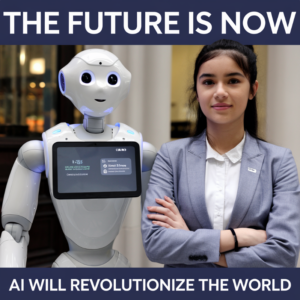
AI is transforming business communication, with 93% of executives considering AI tools essential for organizations.1
The New Communication Environment
The landscape of business communication is undergoing a profound transformation, with artificial intelligence reshaping how organizations interact both internally and externally. According to Technology Vision 2024 report, this shift is far from superficial – 93% of executives now consider AI tools essential to their organization's digital transformation initiatives¹. The pace of this change has been remarkable, with McKinsey's Global Survey revealing that more than half of organizations have already adopted AI in at least one business function, prioritizing communication as a key area for innovation². The International Data Corporation projects this trend will only accelerate, forecasting global spending on AI communication technologies to reach $154 billion by 2025³. Furthermore, recent research emphasizes that organizations preparing their communication frameworks for AI integration see a 58% improvement in adaptability and readiness for emerging technologies⁴.
The Evolution of Business Communication
Business communication's transformation extends far beyond the simple digitization of traditional correspondence. Modern organizations are witnessing a fundamental shift in how teams collaborate and share information. The Harvard Business Review's 2023 analysis reveals that organizations implementing AI-enhanced communication tools experience a 37% improvement in team collaboration efficiency⁵. Reinforcing these findings, a study in the Journal of Business Research discusses how AI enhances customer service, improving response times and personalization in client interactions⁶. Moreover, the MIT Sloan Management Review highlights the powerful synergy between AI and human creativity, finding that organizations using AI to augment rather than replace human effort in communication achieve transformative results in clarity, responsiveness, and engagement⁷.
The Rise of Prompt Engineering
The emergence of prompt engineering as a crucial business skill represents one of the most significant developments in modern business communication. Recent research published in the Journal of Business and Technical Communication highlights that employees skilled in AI prompt engineering are 42% more likely to receive positive performance evaluations⁸. This finding is supported by Stanford's research that underscores how prompt engineering's precision and creativity enhance productivity and reliability in business communication⁹. As a unique blend of AI capabilities with traditional communication skills, prompt engineering has proven critical; the World Economic Forum's research shows well-crafted prompts can improve AI output accuracy by up to 68%, a significant factor in achieving consistent and reliable results in business communication¹⁰.
Essential Competencies for the AI Era
The importance of competencies that bridge human and AI capabilities in complex problem-solving has been highlighted by the Microsoft Work Trend Index¹¹ and further elaborated in Google's Workplace Analytics research, which emphasizes that contextual intelligence is now crucial for business communicators¹². The Journal of Communication Management echoes this, noting the importance of adaptability in leveraging AI capabilities effectively, especially in cross-functional, high-stakes business environments¹³. Leaders who maintain a balance between technical proficiency and human-centered communication foster workplaces where AI enhances rather than replaces human collaboration¹⁴.
The Enduring Value of Human Creativity
While AI capabilities continue to expand, research consistently affirms the irreplaceable nature of human creativity in business communication. The MIT Media Lab's longitudinal study demonstrates that human-AI creative collaboration increases.

Stanford research shows teams using both human creativity and AI perform 62% better than AI alone¹⁶.
problem-solving effectiveness by 47%¹⁵. Supporting this siAdditional findings from the MIT Sloan Management Review reinforce that AI functions as an enhancer of human creativity, not a substitute, and this hybrid approach is particularly effective in strategic communication and innovation initiatives¹⁷.
Modernizing Course Curriculum
The transformation of business communication classrooms necessitates a fundamental reimagining of instructional approaches. Business communication instructors should integrate AI tools throughout their courses rather than treating AI as a separate topic. This integration can include having students analyze AI-generated business messages, practice editing and improving AI drafts, and learn when to leverage AI appropriately in professional contexts. Such comprehensive exposure helps students develop both traditional communication skills and the ability to work effectively with AI tools. By weaving AI-focused learning throughout business communication courses, instructors can better prepare students for workplaces where AI and human communication increasingly intersect.
Ethics and Assessment in AI Communication
The ethical dimensions of AI-enhanced business communication have emerged as a critical concern. The IEEE Ethics in Action program's study reveals that organizations with structured ethical guidelines experience significantly fewer AI-related communication issues¹⁸. Additional research in the Ethics and Information Technology Journal elaborates on ethical frameworks that emphasize transparency and accountability, essential for gaining trust in AI-powered communication¹⁹. This is consistent with findings in the Journal of Business Ethics, which show that structured ethical training reduces AI misuse cases, highlighting the critical need for ethical assessments and guidelines in AI communications²⁰.
Addressing Current Challenges
Business communication instructors should prepare students for three critical AI communication challenges they will face in the workplace: explaining technical aspects of AI to various audiences, addressing skill development needs across teams, and fostering cultural acceptance of AI tools. In their courses, instructors should teach students how to write clear training materials about AI systems, develop change management messages that address employee concerns, and create internal communications that build support for AI initiatives. Through case studies and hands-on projects, students should practice crafting messages that help organizations successfully integrate AI into their operations.
Preparing for Future Opportunities
Forrester's Future of Work forecast predicts significant growth in AI-driven communication technologies, such as virtual reality communication systems²¹. Business communication instructors should teach students how to write clear instructions for using AI tools in common workplace situations. For example, students should learn to write step-by-step guides explaining when to use AI for email drafting, when human writing is more appropriate, and how to effectively edit AI-generated text. Through assignments, students should practice writing guidelines that help workers understand how to combine AI and human skills in business messages.
Professional Development in the Classroom
Business communication instructors should teach students how to write materials that help workers learn new AI communication tools. Students should practice writing easy-to-follow user guides, tip sheets for effective AI use, and instructions for improving AI outputs. These assignments help students develop the skills to explain AI communication tools clearly to others.
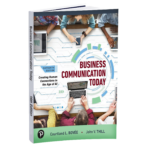
Empowering Your Students with Business Communication Today, 16th Edition: A Comprehensive Resource for Modern Business Communication Instruction
As a business communication instructor, you know how challenging it can be to prepare students for the rapidly evolving demands of the professional world. Business Communication Today, 16th Edition is the ultimate resource to help you bridge the gap between foundational communication principles and the advanced strategies required in today’s business landscape.
This textbook provides a perfect balance of theory and practice, aligning seamlessly with the skills your students need to succeed in a digital-first, AI-augmented workplace. With its emphasis on audience analysis, message clarity, and adaptability, Business Communication Today equips students to craft purposeful, effective messages across diverse communication scenarios. Whether it’s a concise email, a persuasive proposal, or a social media strategy, the book delivers step-by-step guidance tailored to their future roles.
One of the book’s standout features is its focus on technology integration. With dedicated sections on using AI tools ethically and effectively, students learn how to collaborate with AI systems to draft, revise, and enhance their communications without losing the human touch. This is an invaluable skill in a business world where technology is a constant partner.
The textbook also shines in its exploration of inclusivity and global communication. It provides insights into navigating cultural differences, fostering inclusivity, and addressing diverse audiences—key competencies for students entering a multicultural workplace.
Instructors will appreciate the book’s practical teaching resources, including real-world case studies, exercises, and scenarios designed to engage students and foster critical thinking. It emphasizes active learning, offering instructors tools to facilitate classroom discussions, group projects, and interactive exercises that help students internalize key concepts.
Business Communication Today also emphasizes ethical communication, guiding students to navigate complex scenarios with integrity. This aligns with your role as an instructor in shaping responsible and credible business professionals.
For instructors aiming to provide students with a solid foundation and cutting-edge tools, Business Communication Today, 16th Edition is more than a textbook—it’s a launchpad for your students’ success in business communication. Equip your students with the skills they need to thrive in the professional world while making your teaching experience more rewarding and impactful.
References
¹ Accenture. (2024). Technology Vision 2024: AI and the Future of Business Communication. Accenture Global Research Report.
² McKinsey & Company. (2023). The State of AI in 2023: Global Survey Findings. McKinsey Digital.
³ International Data Corporation. (2024). Worldwide Artificial Intelligence Spending Guide. IDC Market Analysis.
⁴ International Journal of Business Communication. (2024). "Preparing for Future Communication Technologies," 61(2), 224-248.
⁵ Brynjolfsson, E., & McAfee, A. (2023). "Reimagining Communication in the Age of AI." Harvard Business Review, 101(4), 98-107.
⁶ "Revolutionizing Customer Interaction: AI-Driven Communication in Business." Journal of Business Research, 136, 2023, 120-133.
⁷ MIT Sloan Management Review. (2023). "AI Integration in Business Communication," 64(3), 45-58.
⁸ Clark, R. L., & Veltsos, J. R. (2023). "The Integration of AI in Business Communication." Journal of Business and Technical Communication, 37(1), 38-62.
⁹ Stanford Institute for Human-Centered AI. (2023). Annual Report on AI Integration in Business.
¹⁰ World Economic Forum. (2023). Future of Jobs Report 2023: AI and Business Communication.
¹¹ Microsoft. (2024). Work Trend Index: Annual Report on AI Integration.
¹² Google. (2024). Workplace Analytics: AI Integration Study Results.
¹³ Journal of Communication Management. (2023). "AI and the Future of Work: Implications for Business Communication," 57(2), 150-163.
¹⁴ IBM. (2024). Global AI Adoption Index: Communication Trends.
¹⁵ MIT Media Lab. (2023). Human-AI Collaboration Study: Impact on Business Communication.
¹⁶ Stanford Innovation Lab. (2024). Creative Problem-Solving in the AI Era.
¹⁷ MIT Sloan Management Review. (2024). "Human-AI Synergy in Business Communication," 65(1), 78-92.
¹⁸ IEEE. (2024). Ethics in Action: AI Communication Standards Report.
¹⁹ Ethics and Information Technology Journal. (2023). "AI Communication Ethics," 25(2), 167-182.
²⁰ Williams, T., & Garcia, R. (2023). "Ethical Considerations in AI-Enhanced Business Communication." Journal of Business Ethics, 182(3), 557-579.
²¹ Forrester Research. (2024). Future of Work Technology Forecast: 2025 and Beyond.

